|
|
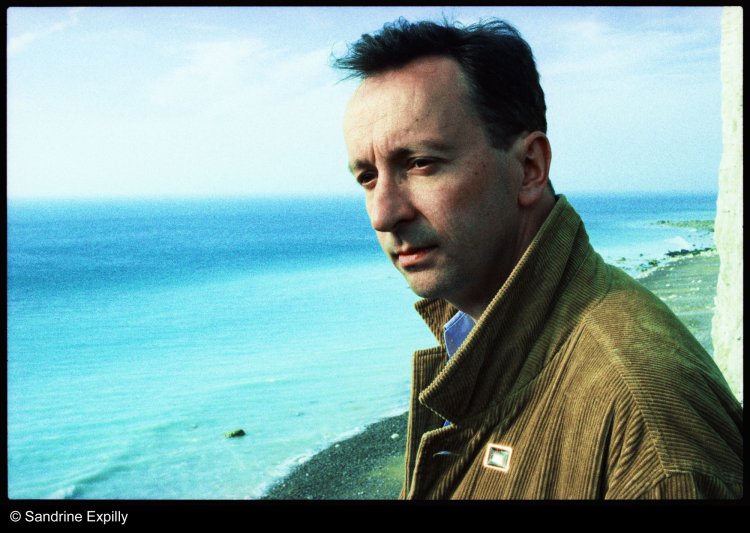
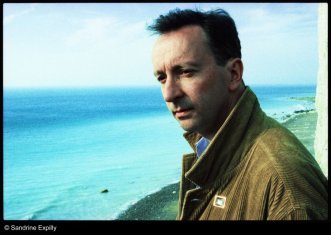
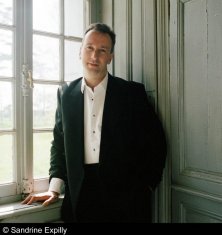
Paul Agnew (Tenor) |
|
Born: 1964 - Glasgow, Scotland |
|
The Scottish tenor, Paul Agnew, read music as a Choral Scholar at Magdalen College, Oxford. After earning his degree, he became associated with the Consort of Musicke, and remained a member of this wonderful early music ensemble for many productive years. At these early stages of his career, he has also made numerous appearances with The Tallis Scholars (Director: Peter Phillips), The Sixteen (Director: Harry Christophers) and the Gothic Voices, before finally striking out on his own as a soloist in the early 1990's.
In 1993 or 1994, Paul Agnew was noticed by William Christie, a celebrated early music conductor who had virtually single-handedly restored to prominence a whole page in the history of music: French Baroque. William Christie, with a keen ear for young talent and a history of raiding the British Isles for soloists for his group Les Arts Florissants, didn't hesitate to add Paul Agnew to his list of hand-picked proteges. Since then, he has appeared in many acclaimed Les Arts Florissants productions, becoming William Christie's most favourite tenor since the founding of Les Arts Florissants. He has sung with Les Arts Florissants more often than any other singer, male or female has. His biggest stage roles under William Christie's direction were Jason in Charpentier's Médée and Hippolyte in Rameau's Hippolyte et Aricie. Although both of these roles were recorded with another tenor, he did make a cameo appearance on the Hippolyte CD: singing Cupid's charming Plaisirs doux vainqueurs, one small aria that is almost worth the price of the entire CD! On disc, he got to shine in such gorgeous Les Arts Florissants recording as La Descente d'Orphee aux Enfers and Les Plaisirs de Versaille, both by M.A. Charpentier; Grands Motets by J.P. Rameau, Mondonville and Desmarest; award-winning Acis & Galatea by George Frideric Handel, etc. His wonderful contribution was undoubtedly one of the reasons Rameau's Grands Motets won Gramophone's Best Early Music Vocal award in 1995. Orphee was also nominated for the 1995 award (in the opera category), but it was defeated by Christie's very own King Arthur.
In addition to appearances with Les Arts Florissants, Paul Agnew has become much in demand as a soloist. His live engagements have included, among others, Purcell's King Arthur with John Eliot Gardiner, Purcell's Fairy Queen, Dioclesian and Timon of Athens with the English Concert under Trevor Pinnock, J.S. Bach's Cantatas with the Orchestra of the Age of Enlightenment, J.S. Bach's B-Minor Mass (BWV 232) with the English Concert and with the Amsterdam Baroque Orchestra, G.F. Handel's Joshua with the Academy of Ancient Music, and G.F. Handel's Theodora with the Gabrieli Consort & Players, He has given a series of acclaimed recitals of English lute songs with lutenist Christopher Wilson in Paris, London, Montreux and Vienna.
Paul Agnew's many recordings, outside of Les Arts Florissants, include W.A. Mozart's Coronation Mass and J.S. Bach's B Minor Mass (BWV 232) and Cantatas with the Amsterdam Baroque Orchestra and Ton Koopman, Sally Beamish's In Dreaming with Fretwork, J.S. Bach's St. John Passion (BWV 245) with the Brandenburg Consort and King's College Choir, Cambridge, J.S. Bach's St. John Passion (BWV 245) with Stephen Cleobury (also on video), J.S. Bach's St. Markus Passion (BWV 247) with Roy Goodman, Berlioz's L'Enfance du Christ with Philippe Herreweghe, G.F. Handel's Solomon with Paul McCreesh and many others. Especially notable is his recent recording of J.S. Bach's Christmas Oratorio (BWV 248) with Philip Pickett. According to Nicholas Anderson of Gramophone, Paul Agnew is the most naturally expressive Evangelist Anderson's ever heard (and he's heard all of them). He has also made a series of acclaimed medieval English songs recordings with lutenist Christopher Wilson.
Current operatic roles include, among others, Orfeo in Monteverdi's Orfeo in Toronto, Telemaco in Trevor Pinnock's production of Monteverdi's Il Ritorno d'Ulisse in Patria, Rameau's Platee and Les Indes Galantes with the Opera de Paris, G.F. Handel's Theodora directed by Paul McCreesh and Monteverdi's Combattimento directed by Marc Minkowski. |
|
|
|
Sources:
Hazard Chase Management, although not verbatim
GoldbergWeb (2003)
Contributed by Galina Kolomietz (February 2001) Website & Aryeh Oron (October 2004) |
|
Paul Agnew : Short Biography | Ensembles: Les Arts Florissants
Bach Discography: Recordings of Vocal Works |
|
Recordings of Bach Cantatas & Other Vocal Works |
|
Conductor |
As |
Works |
|
Stephen Cleobury |
Tenor |
V-3 (1996): BWV 245 [1st recording] |
|
John Eliot Gardiner |
Tenor |
BWV 83, BWV 125
BCP: BWV 7, BWV 14, BWV 20, BWV 24, BWV 26, BWV 30, BWV 38, BWV 44, BWV 75, BWV 81, BWV 98, BWV 109, BWV 150, BWV 165, BWV 167, BWV 177, BWV 183, BWV 185, BWV 188, BWV 194 |
|
Roy Goodman |
Tenor |
[V-3] (1996): BWV 247 |
|
Paul Goodwin |
Tenor |
[V-4] (2001, 2-VHS): BWV 244, in English [4th recording, Evangelist] |
|
Ton Koopman |
Tenor |
BWV 1, BWV 2, BWV 3, BWV 13, BWV 16, BWV 20, BWV 22, BWV 23, BWV 33, BWV 34, BWV 38, BWV 44, BWV 62, BWV 63, BWV 69, BWV 69a, BWV 73, BWV 75, BWV 76, BWV 92, BWV 93, BWV 96, BWV 101, BWV 104, BWV 110, BWV 119, BWV 122, BWV 123, BWV 126, BWV 130, BWV 133, BWV 134, BWV 134a, BWV 155, BWV 161, BWV 162, BWV 163, BWV 165, BWV 179, BWV 180, BWV 186, BWV 190, BWV 191, BWV 193, BWV 198, BWV 201, BWV 208, BWV 211, BWV 214, BWV 215
BWV 244 [3rd, CD/DVD], BWV 247 [1st], BWV 247 [2nd, DVD] |
|
Jean-Claude Malgoire |
Tenor |
BWV 244 |
|
Paul McCreesh |
Tenor |
BWV 243, BWV 249 |
|
John Nelson |
Tenor |
BWV 232 [2nd, DVD] |
|
Philip Pickett |
Tenor |
BWV 63, BWV 238, BWV 243a, BWV 248 |
|
Philip Pickett |
Tenor |
Member of New London Consort:
C-1 (1995): BWV 63, BWV 238, BWV 243a |
|
Links to other Sites |
|
Paul Agnew (Hautes-contre)
Paul Agnew, tenor (HarrisonParrott)
Paul Agnew, biography, discography (Goldberg)
Paul Agnew, ténor - biographie (Festival Mozart) [French/English]
Christopher Wilson & Paul Agnew - Artist Diary
Paul Agnew (OperaBase)
Raphi's Serious Singers List: Paul Agnew |
|
|