|
|
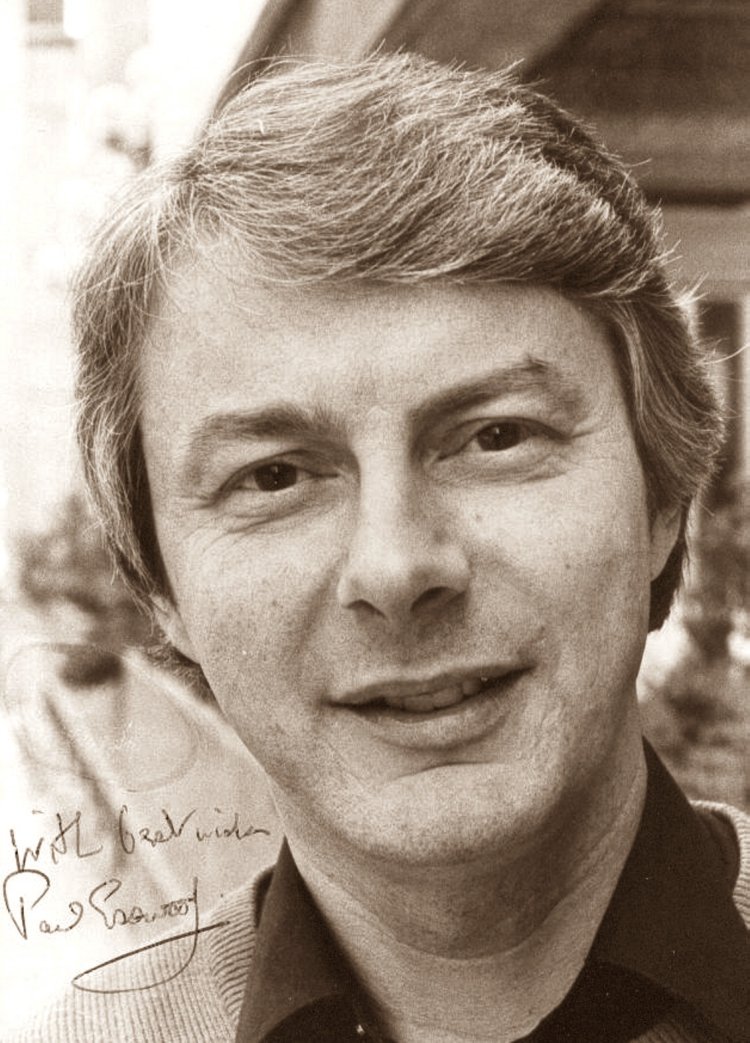
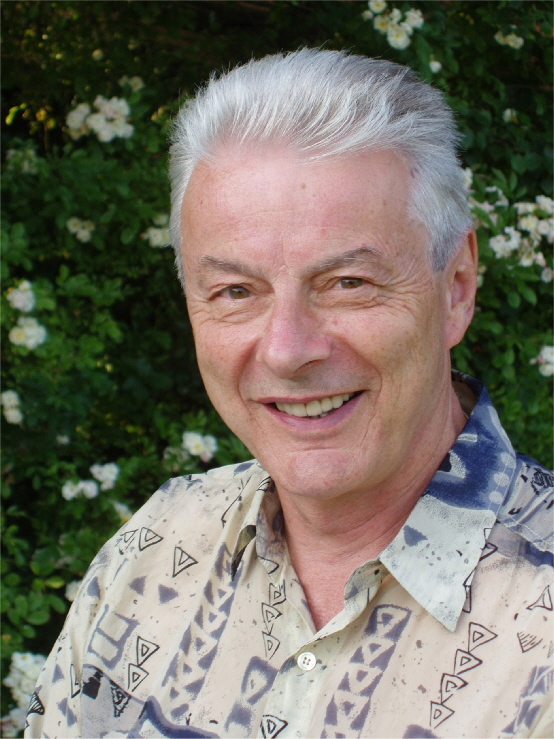
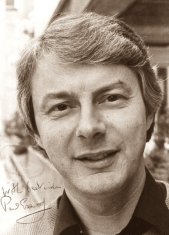
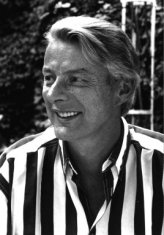
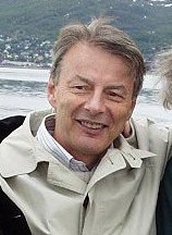
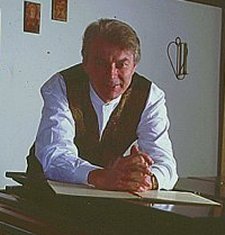
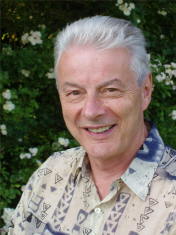
Paul Esswood (Counter-tenor) |
|
Born: June 2, 1942 - West Bridgford, England |
|
The English counter-tenor, Paul (Lawrence Vincent) Esswood, studied with Gordon Clinton at the Royal College of Music in London from 1961 to 1964, and then was a lay vicar at Westminster Abbey until 1971.
In 1971 Paul Esswood made his formal debut as a counter-tenor in a BBC performance of George Frideric Handel’s Messiah. His operatic debut followed in Cavalli’s Erismena in Berkeley, California, in 1968.
Paul Esswood is one of the world‘s leading counter-tenors. He is one of the trio of Englishmen who really put counter-tenor singing forward in the late 1960’s and 1970’s (the two others are Alfred Deller and James Bowman). He had a wide range, with a rather vibrato-ish, womanly sound. Nevertheless, great powers of phrasing and very expressive.
Paul Esswood has worked in opera houses throughout Europe and America and was the first counter-tenor ever to sing at La Scala, Milan. He took part in the historic Nikolaus Harnoncourt - Ponelle Monteverdi Cycle at Zurich Opera, which has also been recorded and filmed for television worldwide. He has appeared at the Salzburg Festival, performing G.F. Handel's Jephtha and Saul and Monteverdi's Orfeo. He has sung Oberon in the Cologne Opera production of Benjamin Britten's Midsummer Night's Dream and title roles in the Karlsruhe Händel Festival production of G.F. Handel's Admeto and the English Bach Festival production of G.F. Handel's Riccardo Primo at the Royal Opera House, Covent Garden.
Several roles have been written for Paul Esswood including the title role in Philip Glass's Akhnaten (Stuttgart) and Death in Penderecki's Paradise Lost (Chicago, Milan and Stuttgart). Most recently he sung the role of Seff in Schlafes Bruder by Herbert Willi in the world première in Zurich, followed by further performances of this in the first Austrian production in Innsbruck.
As a concert and recital singer, Paul Esswood works in the world's most important musical centres: London, Edinburgh, Berlin, Vienna, New York, Washington, Los Angeles and the key festivals such as Salzburg, Graz, Aix-en-Provence, 3 Choirs and London Promenade Concerts. His repertoire is extensive: from the major works by Monteverdi, Cavalli, J.S. Bach, G.F. Handel, Purcell, W.A. Mozart, Haydn, Schubert and Robert Schumann. While he was best known for his performances of early masters, he also appeared in modern works, including the premiers of Penderecki’s Paradise Lost (1978) and Magnificat, Philip Glass’s Akhnaten (1984), and Schnittke (Faust Cantata - world première in Vienna and St. Florian Symphony No.2 - world première in London).
Paul Esswood has made over one hundred and fifty recordings, including the Monteverdi Operas and J.S. Bach's St. Matthew Passion (BWV 244),Christmas Oratorio (BWV 248), Magnificat (BWV 243) and the Teldec complete Cantata project under Nikolaus Harnoncourt/Gustav Leonhardt. He sang most of the alto parts in this cycle. His 4th recording of G.F. Handel's Messiah was with the Mormon Tabernacle Choir, Utah, under David Willcocks and under Roger Norrington he made a video recording of Purcell's 1692 Ode Hail, Bright Caecilia. His solo recordings include Purcell, Robert Schumann, Songs to my Lady (Lute songs) as well as a recent release of folk song arrangements and the Canticle Abraham and Isaac by B. Britten with the tenor James Griffert. Also recently released was the world premiere performance of Schnittke's Symphony No.2 (St Florian) with the BBC Symphony Orchestra under Gennady Rozhdestvensky.
As a teacher, Paul Esswood was a professor at the Royal College of Music (1977-1980). From from 1985 he is a Professor of Baroque vocal interpretation at the Royal Academy of Music and gives regular master-classes throughout the world, recently visiting Jerusalem, Aldeburgh and Karlsruhe.
Paul Esswood co-founded in 1967 the Pro Cantione Antiqua, and a capella male vocal group. He also continued to pursue his solo career, appearing at many major European festivals. With Cantione Antiqua he has just completed a tour of Japan and Hong Kong. In 1990 he was appointed an Honorary Member of the Royal Academy of Music and in 1997 he was awarded the Deutsche Händel-Preis for his contribution to the performances of G.F. Handel.
Future plans included visits to Germany and Spain with Pro Cantione Antiqua, concerts in Sweden (J.S. Bach), France (G.F. Handel) and Poland (Penderecki) as well as further performances of the critically acclaimed 3 Counter-tenors recital programme in the Wratislavia Cantans Festival, Poland. |
|
|
|
Sources:
Countertenors Website
Baker’s Biographical Dictionary of 20th Century Classical Musicians (1997)
The Musicke Company Website
Contributed by Aryeh Oron (May 2001, May 2004); Manfred Krugmann (Photo 11, June 2012) |
|
Recordings of Bach Cantatas & Other Vocal Works |
|
Conductor |
As |
Works |
|
Arnold Dolmetsch Days Festival |
Alto |
Duet from BWV 78, Arias from BWV 81, BWV 175, BWV 244 |
|
Nikolaus Harnoncourt |
Alto |
BWV 2, BWV 3, BWV 4, BWV 5, BWV 6, BWV 11, BWV 17, BWV 20, BWV 21, BWV 24, BWV 26, BWV 27, BWV 28, BWV 29, BWV 30, BWV 34, BWV 35, BWV 36, BWV 37, BWV 38, BWV 41, BWV 42, BWV 43, BWV 44, BWV 48, BWV 60, BWV 62, BWV 63, BWV 64, BWV 69, BWV 69a, BWV 70, BWV 71, BWV 72, BWV 76, BWV 78, BWV 80, BWV 81, BWV 85, BWV 86, BWV 87, BWV 93, BWV 94, BWV 96, BWV 97, BWV 99, BWV 101, BWV 102, BWV 105, BWV 108, BWV 109, BWV 110, BWV 111, BWV 112, BWV 115, BWV 116, BWV 119, BWV 120, BWV 121, BWV 125, BWV 126, BWV 131, BWV 136, BWV 137, BWV 139, BWV 146, BWV 148, BWV 154, BWV 155, BWV 156, BWV 161, BWV 162, BWV 169, BWV 182, BWV 183, BWV 185, BWV 186, BWV 188
BWV 243, BWV 244 [1st], BWV 248 |
|
Richard Hickox |
Alto |
BWV 233-236 |
|
Gustav Leonhardt |
Alto |
BWV 7, BWV 8, BWV 9, BWV 10, BWV 12, BWV 13, BWV 16, BWV 22, BWV 23, BWV 54, BWV 66, BWV 67, BWV 74, BWV 75, BWV 77, BWV 79, BWV 88, BWV 89, BWV 90, BWV 91, BWV 92, BWV 98, BWV 100, BWV 103, BWV 144, BWV 149, BWV 150, BWV 151, BWV 159, BWV 164, BWV 165, BWV 166, BWV 170, BWV 172, BWV 175, BWV 176, BWV 180, BWV 181, BWV 184, BWV 187 |
|
Anders Öhrwall |
Alto |
BWV 232 |
|
Paul Steinitz |
Alto |
BWV 131, BWV 243 |
|
Hans Thamm |
Alto |
[CR-126] (1972, Radio recording): BWV 126 |
|
August Wenzinger |
Alto |
G.F. Handel: Brockes Passion, HWV 48 |
|
Links to other Sites |
|
Listing of Countertenors
Paul Esswood (The Musicke Company)
Paul Esswood - Counter-tenor (Official Website)
Paul Esswood - Counter-Tenor (Fondazione del Bianco)
Paul Esswood (RAM)
Spring 1999 (E&D CS)
xrefer: Esswood, Paul (Lawrence Vincent) (West Bridgford, 1942)
about This Performance of George Friderick Handel's Messiah
Paul Esswood (Wikipedia) |
|
|