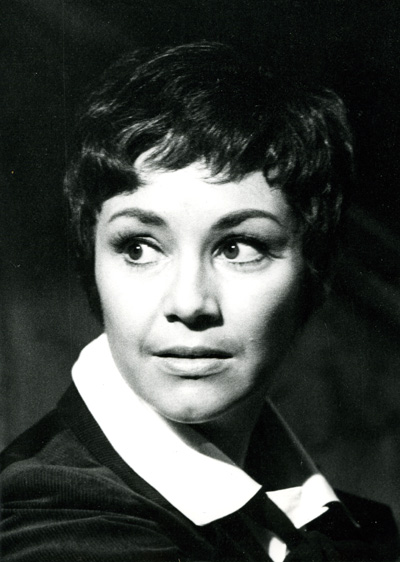
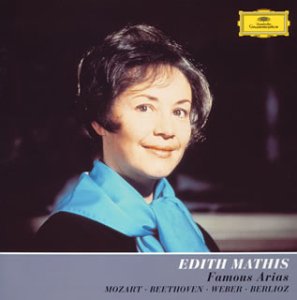
|
|
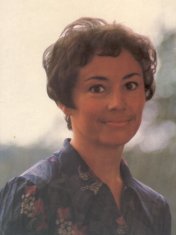
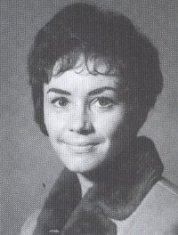
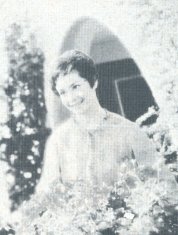
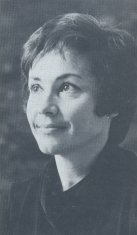
Edith Mathis (Soprano) |
|
Born: February 11, 1938[1] - Lucerne, Switzerland
Died: February 9, 2025 - Salzburg, Austria |
|
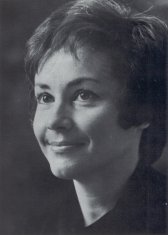
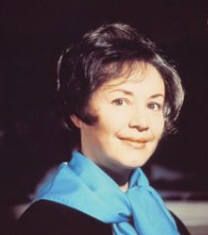
The admired Swiss soprano, Edith Mathis, received her musical training at the Lucerne Conservatory, and from Elisabeth Bosshart in Zürich.
In 1956[2] Edith Mathis made her operatic debut as the 2nd boy in Die Zauberflöte in Lucerne. Her first stage experience was gained in Lucerne and Zürich, and soon afterwards she joined Cologne Opera (1959). During this period she also appeared as guest artist at the Hamburg State Opera[3] (1960-1975), at Glyndebourne Festival (1962-1965; as Cherubino and as Sophie in Der Rosenkavalier) and at the Salzburg Festival (debut in 1960, in concert). In 1963 she became a member of Deutsche Oper in Berlin, and since sang in most of the leading opera houses of the world, including The Royal Opera House, Covent Garden in London (1970-1972, as W.A. Mozart's Susanna and Despina), the Metropolitan Opera in New York (debut in 1970, as Pamina in Zauberflöte; returned to New York as Ännchen in Der Freischütz, Sophie, and Zerlina in W.A. Mozart's Don Giovanni), the Bavarian State Opera, the Vienna State Opera and the Opéra de Paris. Her roles include also Ninetta in La Finte Semplice (Salzburg), L.v. Beethoven's Marzelline, Debussy's Mélisande, Verdi's Nannetta and W.A. Mozart's Aminta; W.A. Mozart's Countess in Le Nozze di Figaro; Weber's Agathe in Der Freischütz, R. Strauss' Arabella and Marschallin in Der Rosenkavalier. She sang in the premieres of Henze's Der jung Lord (Berlin, 1965) and Sutermeister's Le Roi Berénger (Munich 1985). In 1956 she appeared in the title role in the revival of the opera Massimilla Doni in Berne and Zürich as part of Otmar Schoeck’s 70th birthday celebrations, followed by a recording conducted by Gerd Albrecht. In 1986 she appeared in Barcelona as Agathe, and in 1990 made her debut at the Berne City Opera as the Marschallin.
Alongside her operatic career, Edith Mathis also had an extensive Lieder and oratorio repertory and her many concert appearances have included tours to Japan, the USA, Australia, Russia and Israel. She received numerous awards for her work on the operatic stage, in the concert hall and in the recording studio, including the Mozart Medal from the Mozarteum Salzburg, the Hans-Reinhard-Ring from the Swiss Society for Theatre, the Arts Prize from the city of Lucerne, the Buxtehude Prize from the Lübeck Senate, and the Prix Mondial du Disque. She was a Bayerische Kammersängerin since 1979.
Edith Mathis was married with the conductor and pianist Bernhard Klee, with whom she often appeared in recitals. In her later years she became a sought-after teacher. Among the singers who studied with her and/or attended her master-classes: Katrin Auzinger (Mezzo-soprano), Cecília Aymí (Soprano), Donna Brown (Soprano), Sybille Diethelm (Soprano), Soprano Jörg Dürmüller (Tenor), Maria Erlacher (Soprano), Diana Fischer (Soprano), Brigitte Geller (Soprano), Judith Graf (Soprano), Mirella Hagen (Soprano), Katrin Heles (Mezzo-soprano), Maria Regina Heyne (Soprano), Günter Klein (Bass), Heike Maria Kumlin (Soprano), Annette Labusch (Soprano), Ruth Lau (Mezzo-soprano), Claudia Patacca (Soprano), Sophia Patsi (Contralto), Rudolf Rosen (Baritone), Sibylla Rubens (Soprano), Stephanie Wüst (Soprano), Łucja Zarzycka (Soprano), and many others.
Recordings: W.A. Mozart's Le Nozze di Figaro; W.A. Mozart's Die Zauberflöte; L.v. Beethoven's Fidelio; Die Freunde von Salamanka (Schubert), Der Wildschütz (Lortzing); Frau Fluth in Nicolai's Lustige Weiber van Windsor; W.A. Mozart's Ascanio in Alba, Il Re Pastore, Il Sogno di Scipione and Apollo et Hyacinthus; J.S. Bach Cantatas (many of them on Archiv Produktion under Karl Richter); Haydn's Il Mondo della Luna and L'lnfedeltà Delusa (both on Philips under Antal Doráti); George Frideric Handel's Ariodante. |
|
[1] According to "Opernlexikon" she was born on February 11, 1936.
[2] According to "Opernlexikon" she made her operatic debut in 1957.
[3] According to "Who's Who" she was a member of the Hamburg State Opera from 1960 to 1972. |
|
|
|
More Photos |
|
Sources:
Hyperion Website
Baker’s Biographical Dictionary of 20th Century Classical Musicians (1997)
International Who's Who in Music & International Directory (13th Edition, 1992/93)
Opernlexikon (Author: Horst Seeger, 4th revised edition 1989)
Contributed by Aryeh Oron (May 2001, June 2006); Johannes Honigmann (June 2006) |
|
Recordings of Bach Cantatas & Other Vocal Works |
|
Conductor |
As |
Works |
|
Under her name |
Soprano |
BWV 508 |
|
Karl-Friedrich Beringer |
Soprano |
BWV 19, BWV 30 |
|
Jörg Ewald Dähler |
Soprano |
[V-1] (2000): BWV 518, BWV 82/2&3, BWV 508 BWV 513; BWV 232 |
|
Colin Davis |
Soprano |
BWV 232, BWV 244 |
|
Wolfgang Gönnenwein |
Soprano |
BWV 32, BWV 39, BWV 78, BWV 106 |
|
Benhard Klee |
Soprano |
BWV 244 |
|
Rafael Kubelík |
Soprano |
BWV 232 |
|
Karl Richter |
Soprano |
BWV 1, BWV 5, BWV 9, BWV 10, BWV 11, BWV 13, BWV 17, BWV 21, BWV 23, BWV 26, BWV 27, BWV 28, BWV 30, BWV 38, BWV 39, BWV 44, BWV 51, BWV 61, BWV 63, BWV 64, BWV 68, BWV 70, BWV 76, BWV 80, BWV 92, BWV 93, BWV 96, BWV 100, BWV 105, BWV 111, BWV 115, BWV 116, BWV 121, BWV 129, BWV 130, BWV 132, BWV 137, BWV 139, BWV 140, BWV 171, BWV 178, BWV 179, BWV 180, BWV 187, BWV 199
[V-11] (1979, 3-CD): BWV 244 [7th recording; Arias, First Maid, Pilate's Wife] |
|
Helmuth Rilling |
Soprano |
BWV 201, BWV 249a |
|
Peter Schreier |
Soprano |
BWV 36c, BWV 201, BWV 204, BWV 205, BWV 206, BWV 207, BWV 208, BWV 209, BWV 213, BWV 214, BWV 215
[C-3] (1976, LP/CD): BWV 202
[C-7] (1975, LP/CD): BWV 211 [1st recording], BWV 212 |
|
Links to other Sites |
|
Edith Mathis - Soprano (Hyperion)
Edith Mathis - Biography (AMG)
Profile of faculties
Edith Mathis (Wikipedia) [German]
Edith Mathis (Answers.com) |
|
|