|
|
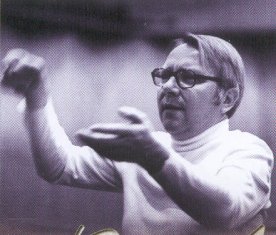
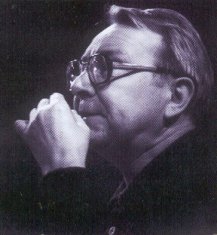
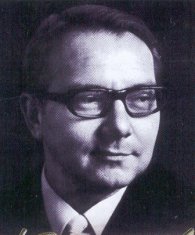
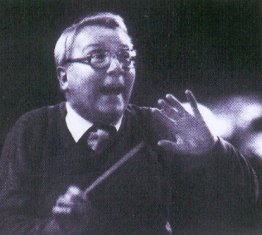
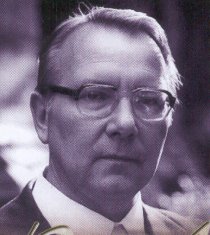
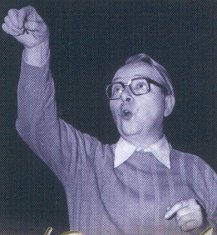
Hans-Joachim Rotzsch (Conductor, Tenor, Thomaskantor) |
|
Born: April 25, 1929 - Leipzig, Saxony, Germany
Died: September 24, 2013 - Leipzig, Saxony, Germany |
|
The German tenor and conductor, Hans-Joachim Rotzsch, was born in Leipzig and, as far as we know, is the first Thomaskantor to come from the ‘Bach City’ itself. Before becoming Thomaskantor, Rotzsch has close contact with two of his predecessors in office. From 1940 to 1945 he attended the Musisches Gymnasium in Frankfurt am Main, the school at which Kurt Thomas was headmaster; later, whilst studying, he was to have Günther Ramin as one of his organ teachers. In the intervening period, however, the sixteen-year-old Rotzsch saw the immediate prospects of entering upon a musical career in post-war Germany, so that he initially became a motor mechanic. Then, in 1949, he began to study church music at the Leipzig Conservatory, from which he graduated in 1953, going to take private singing lessons afterward.
Hans-Joachim Rotzsch first made his name as an oratorio tenor, arousing international attention when he stood in at a short notice for one of the solo tenors in J.S. Bach's St John Passion (BWV 245) in Basle in 1954 during a concert tour of the choir of the Thomaskirche. Rotzsch’s involvement with the choir now deepened; he became a regular guest performer with the ensemble and indeed, in 1953, he had become a member of the Leipziger Bachsolisten. Moreover, Günther Ramin handed over the voice training of the choir to his former organ pupil, so that Rotzsch had the opportunity to get to know the choir very well. From 1963 onward, he was then able to gain intensive experience in choir-directing, as director of the Leipziger Universitätschor - at first provisionally and from 1965 to 1973 officially. When Erhard Mauersberger vacated the post of Thomaskantor in 1972, Rotzsch many years of involvement with the Thomanerchor Leipzig and his experience as a choir director made him Erhard Mauersberger’s logical successor.
One of the new Thomaskantor’s first official acts was to expand the choir from 80 to 90 (later 93) boys. The most important effect of this measure was to give more substances to the soprano and alto tone and so to achieve a more balance choral sound. In the ensuing years, the choir’s commitments grew constantly; over and above the concerts at the Thomaskirche, it was now increasingly in demand at the Gewandhaus and for commercial and broadcasts recordings.
As J.S. Bach 15th successor in office, Hans-Joachim Rotzsch held the position of Thomaskantor until 1991, succeeded by Georg Christoph Biller.. |
|
|
|
More Photos |
|
Sources:
Liner notes to 11-CD Set Leipzig Classics 001823-2BC (Bach Made in German Vol. IV, 1999)
Contributed by Aryeh Oron (April 2001); Matthias Hansen (Photos 13-14 - August 2009); Manfred Krugmann (Dates & Photo 15, September 2013) |
|
Recordings of Bach Cantatas & Other Vocal Works |
|
Conductor |
As |
Works |
|
Theodor Egel |
Tenor |
BWV 245 [NYR] |
|
Diethard Hellmann |
Tenor |
BWV 34, BWV 157, BWV 189 |
|
Eigel Kruttge |
Tenor |
[CR-102] (1960, Radio recording): BWV 102 |
|
Erhard Mauersberger |
Tenor |
[CR-13] (1967 or earlier, Radio recording): BWV 13
[CR-73] (1964?, Radio recording): BWV 73
[CR-74] (1967, Radio recording): BWV 74
[CR-85] (1964, Radio recording): BWV 85
[CR-86] (c1964, Radio recording): BWV 86
[CR-116] (1962, Radio recording): BWV 116
[CR-136] (1962?, Radio recording): BWV 136
[CR-149] (1967, Radio recording): BWV 149
[CR-180] (1969, Radio recording): BWV 180
[CR-182] (1966, Radio recording): BWV 182 |
|
Rudolf & Erhard Mauersberger |
Tenor |
BWV 244 |
|
Günther Ramin |
Tenor |
BWV 73, BWV 106, BWV 179
[CR-9] (before 1956, Radio recording): BWV 9
[V-11] (1955, 2-CD): BWV 245 [3rd recording] |
|
Hans-Joachim Rotzsch |
Tenor |
H.J. Rotzsch sings the tenor part in some of recordings conducted by him |
|
Kurt Thomas |
Tenor |
BWV 4, BWV 11, BWV 36c, BWV 71, BWV 111, BWV 140, BWV 201, BWV 211, BWV 243
[CR-88] (1957, Radio recording): BWV 88
[CR-132] (before 1960, Radio recording): BWV 132
[CR-147] (1957, Radio recording): BWV 147 [2nd recording]
[CR-163] (1958, Radio recording): BWV 163
[CR-194] (1957-1960, Radio recording): BWV 194 |
|
Max Thurn |
Tenor |
Radio: BWV 29, BWV 113, BWV 121 |
|
Heinz Wunderlich |
Tenor |
BWV 100, BWV 175 |
|
Linkto other Sites |
|
Rotzsch, Hans-Joachim (Leipzig Lexikon) [German] |
|
|

