|
|
Guide to Bach Tour
Zeitz [F] |
|
Contents |
|
Description | History
J.S. Bach: Connection | Events in Life History | Performance Dates of Vocal Works | Festivals & Cantata Series
Features of Interest | Information & Links | Town Guide
Photos: Part 1 | Part 2 | Part 3 | Part 4 | Part 5 | Part 6 | Maps |
| |
 |
| Description |
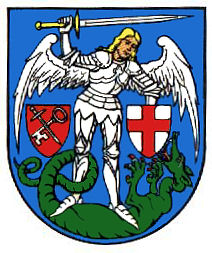
The old town Zeitz (the seat of Zeitzer Land) is situated on the river Weiße Elster in the middle of the triangle of the federal states Saxony-Anhalt,Thuringia and Saxony.
Country: Germany | State: Saxony-Anhalt | District: Burgenlandkreis | Area: 74.88 km² | Population: 31,000 (December 2007) |
|
History |
|
Zeitz was first recorded under the name Cici in the synode of Ravenna in 967. From 968 it was a diocesan town, although this was moved to Naumburg in 1028. Donations by German kings and emperors led to the creation of the diocesan district in the bishopric of Naumburg-Zeitz, where the bishops were also the regional rulers. Upon his election in 1285 Bishop Bruno re-established the bishop's residence in Zeitz castle; however the bishops continued to be elected in Naumburg.
After the death of Bishop Philipp von Freising and Naumburg-Zeitz (January 6, 1541), the cathedral chapter there decided that the provost of the diocesan chapter of Zeitz, Julius von Pflug, was to be his successor. However, Elector Johann Friedrich of Saxony prevented Pflug from taking office and managed to have Luther's friend Nikolaus von Amsdorf consecrated as bishop on January 20, 1542 (and for the first time ever according to the Protestant rite!). After Emperor Charles V defeated Johann Friederich and the "Schmalkaldischer Bund", an alliance of towns and princes supporting the Protestant Reformation, in April 1547 Amsdorf was forced to give way to Julius von Pflug. Pflug was the last bishop to rule there, from May 1547 until his death on September 3, 1564. Afterwards the bishopric of Naumburg-Zeitz was dissolved. Supreme authority in the diocesan district was from now on vested in administrators from the families of the Electorate of Saxony. During the Thirty Years' War Swedish troops destroyed the episcopal castle of Zeitz at the end of 1644. When the Dukedom of Saxony-Zeitz was formed in 1657, Duke Moritz had his Baroque residence, the Moritzburg Castle, built from 1657 to 1678 on the site of the old castle on the White Elster river. In 1718, after the death of Moritz's son and successor, Moritz Wilhelm, the Dukedom of Zeitz reverted to the Electorate of Saxony.
The castle remained the seat of the governing body of the diocese, which was not dissolved until 1815/16, when the majority of the diocese fell to Prussia. From this area the administrative district of Zeitz was formed, the southern most tip of the Prussian province of Saxony.
From around the middle of the 19th century Zeitz was transformed into a modern industrial town. Among the most well-known products manufactured here were the pianos, children's prams, machines for the extraction and processing of crude lignite, the many chemical products and others. The population of Zeitz increased rapidly and the town spread far beyond its mediaeval boundaries. Zeitz is currently home to 36,000 inhabitants. |
| |
|
Bach Connection |
|
Anna Magdalena Wilcke, J.S. Bach second wife, was born on September 22, 1701 at Zeitz. Her father, Johann Caspar Wilcke, was a court trumpeter; he worked at Zeitz until about February 1718, when he moved to Weißenfels where he died on November 30, 1731. The surname was variously spelt. Anna’s mother (Margaretha Elisabeth Liebe, d March 7, 1746) was daughter of an organist and sister of J.S. Liebe who, besides being a trumpeter, was organist of two churches at Zeitz from 1694 until his death in 1742. As a trumpeter’s daughter, Anna may well have met the Bachs socially. The stories that she was a public figure, having sung at Köthen and the other local courts since the age of 15, have been discredited; they are said to have arisen through confusion with her elder brother, a trumpeter. However, she was paid for singing, with her father, in the chapel at Zerbst on some occasion between Easter and midsummer 1721. By September 1721, aged just 20, she was at Köthen, well acquainted with J.S. Bach (aged 36), and ready to marry him on December 3. The prince saved J.S. Bach 10 thaler by giving him permission to be married in his own lodgings. The birth-house of Anna Magdalena in Brüderstrasse was not preserved; neither it has been reconstructed. The place is indicated by a commemorative tablet on the outer wall of the house (See: Photos Part 2). |
|
Events in Life History of J.S. Bach : Not known. |
|
Performance Dates of J.S. Bach’s Vocal Works : None. |
|
Bach Festivals & Cantata Series : None. |
| |
|
Features of Interest |
|
Zeitz has a lot of sights to offer which are predominantly situated along the "Street of Romanic".
Very worthseeing is the residential castle Moritzburg which has been built in the style of Baroque. There you will also find the youngest building of Zeitz called the Cathedral of St. Peter and Paul. The oldest part of the cathedral is the crypt which originates from the second half of the 10th century.
In the 17th century the dukes of Saxony-Anhalt used this crypt as a burial site. Today you still have the opportunity to see 13 coffins from the duke´s family, like e. g. the coffin of Duke Moritz which was the founder of the duchy to Saxony-Zeitz. Inside the castle Moritzburg the museum of Zeitz found its worthy place.
Other important and what is more worthseeing sights which Zeitz has to offer are the Michaeliskirche and the Franziskaner-Klosterkirche (13th century). The Michaeliskirche (first recorded in 1154), originally a Roman Basilika, guards an Original Print of Martin Luther’s Thesis from 1517. The church as well as other buildings in Zeitz are closely connected with the history of Martin Luther and his male descendants.
The late gothic Town Hall (built between 1504 and 1509, reconstructed between 1907 and 1909) is the symbol of the city and togther with nicely restored houses and the 3 market-places it forms the medieval appearance of the city Zeitz.
Many other buildings in the surrounding of Zeitz like e. g. the Kloster Posa, the Haynsburg and different churches in Schkauditz, Gleina, Salsitz and a lot more belong to the Roman achitecture. Visitors must ensure that they do not miss the underground passages in the old part of the town. Between the 14th and 18th century beer, wine and food were originally stored in this nearly 9 km long tunnel and vault system.
Traditionally connected with mining, Zeitz ownes the conceptionally oldest briquette-factory of the world, i. e. the Herrmannsschacht. Nowadays it is designed as a technical monument.
Castle Moritzburg: baroque-style castle with the cathedral of St. Peter and Paul. The 10th century crypt displays 17th century tin coffins including that of Moritz, Duke of Saxony..
Michaeliskirche (1154): originally a Roman basilica and contains a 1517 original of Martin Luther's 95 Theses..
Franziskaner-Klosterkirche: 13th century.
Town Hall (1504-1509; reconstructed between 1907 and 1909): late gothic structure that, together with restored houses and 3 market-places, provides Zeitz' medieval appearance. The symbol of the city.
Nicely restoredhouses.
3 market-places.
Herrmannsschacht: a technical monument in a former brick factory.
Geburtdhaus von Anna Magdalena Bach
See detailed description and photos at: Town Guide |
|
Information & Links |
|
Zeitz-Information
Altmarkt 16
06712 Zeitz
Fon: +49-3441-83291 or +49-3441-19433
Fax: +49-3441 / 83331
E-Mail: zeitz-information@zeitz.de
Mein Zeitz (Official Website) [German/English]
Zeitz (Meinestadt) [German]
Cityreview: Sachsen Anhalt > Zeitz [German]
Zeitz (Sinclair) [French/English]
Roland Rittig / Rüdiger Ziemann - Ernst Ortlepp [German/English]
Stadt Zeitz (Guillermo Lamas] [Spanish/German]
Zeitz (Wikipedia) |
| |
|
Prepared by Aryeh Oron (March 2004 - December 2009) |
|
|