|
|
Cantata BWV 48
Ich elender Mensch, wer wird mich erlösen
Commentary - Part 2 |
|
Continue from Part 1 |
|
Thomas Braatz wrote (November 4, 2005):
W. Gillies Whittaker [The Cantatas of Johann Sebastian Bach]
The following is W. Gillies Whittaker’s commentary on BWV 48 as contained in volume 2 of “The Cantatas of Johann Sebastian Bach” [Oxford University Press, 1959]:
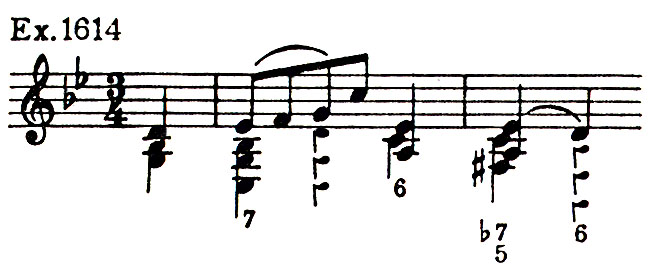
>>If the anonymous librettist of “Ich elender Mensch” was he who provided for BWV 45, he was here more fortunate in the selection of a scriptural verse, Romans 7:24. The quotation is so short that at first sight it seems inadequate for a lengthy chorus; only Bach’s magical scheme conceals its brevity. Orchestral and choral forces move in three planes. The opening ritornello is for strings; violin 1, in a two-bar phrase:
Ex. 1614: |
|
|
|
asks “wer wird mich erlösen” (“who will me deliver”) in tones of impassioned questioning. It rises higher and higher, becoming increasingly tense. After these eight bars the top line curves down resignedly and the lower parts move almost wholly in regular crotchets. Violin 1 throughout confines itself to its theme, which never occurs elsewhere, although the lower strings sometimes depart from their time-pattern to double the voices. Except where the descending violin idea is heard and in one eight-bar passage, the bassi maintain incessantly the |
|

|
|
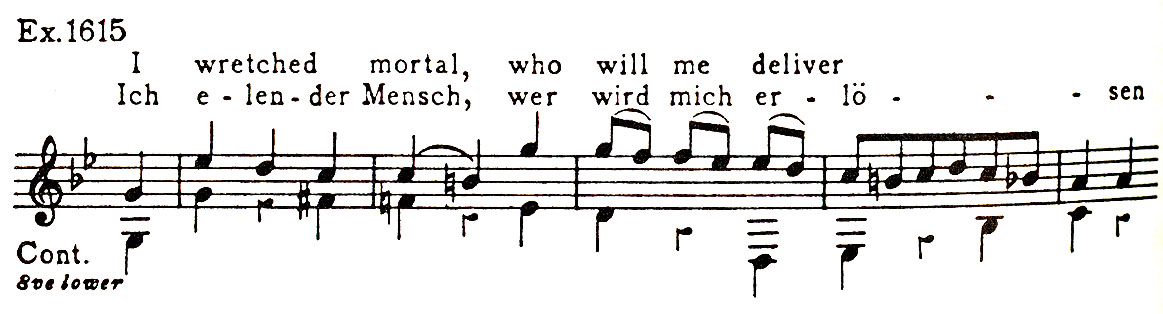
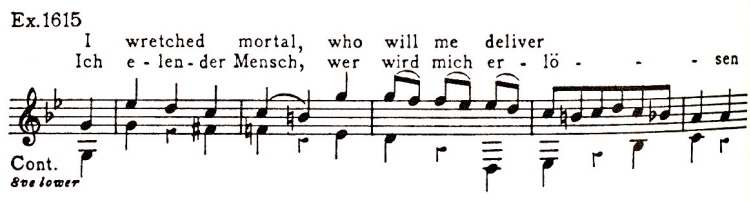
time-pattern. Sopranos and altos begin with a freely canonical idea, a pathetic crotchet melody to the first three words, the tear-motive to “wer wird mich,” undulating quavers to “erlösen”:
Ex. 1615: |
|
|
|
and a despairing drop, with cross-accents, to “dieses Todes!”:
Ex. 1616: |
|

|
|
The choral lines are almost wholly based upon these ideas. As ever, the treatment of this scanty vocal material is consummately skillful. The interludes divide the remainder into four sections: (1) 15 bars, B.T.S.A., (2) 10 bars, T.B., (3) 24 bars, A.S.T.B. then S.A.T.B. followed by two ornamented versions of the opening bars, S.A., an exquisitely tender form, then T.B., (4) 26 bars, S. with A. in counterpoint, T.B. one bar after instead of two, T.B.S.A. (it will be noticed that the order of entries is never the same) followed by a free portion, mostly in longer notes. Grief and depression, suffering and mourning, these are the burden of strings and voices. Bach's faith refuses to allow this to be the whole picture, for the Gospel for the Nineteenth Sunday after Trinity relates the healing of the man sick of the palsy when Christ passed over in a ship to His own city (Matthew 9: 1-8). The questioning violins and the anguished lament of the chorus are answered immediately. Trumpet and two unison oboes play in canon (lines 1-6 at two bars' distance and at a fourth below) the chorale “Herr Jesu Christ, ich schrei zu dir” (“Lord Jesus Christ, I cry to Thee From greatly troubled soul, Thy omnipotence let appear to me And me not thus torment. Much greater is the anguish and pain, So troubled and disturbed my heart, Than that I can tell.” Anon. The anonymous tune is the same as “Herr Jesu Christ, du höchstes Gut.”). Where the librettist has provided only an agonized question, Bach has told his listeners where to look for succor. The canon of the final line is at a bar's distance, coinciding with the alto entry, the last of all, a most beautiful climax.
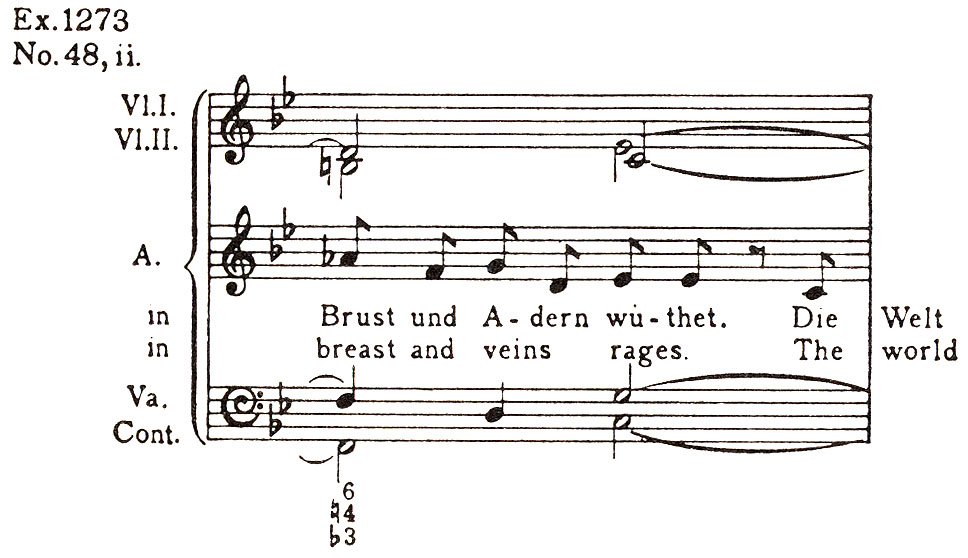
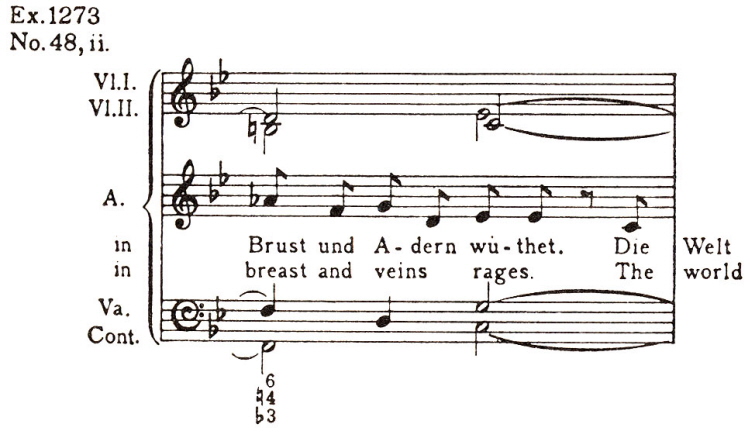
The harmonic scheme of this wonderful chorus is intensely chromatic; that of the alto recitative with strings is even more so. It is the tortured cry of the sufferer, his body wasted with disease, his soul pierced by the poison of evil: “Oh pain, oh misery! which me strikes, while sins' poison through me in breast and veins rages.”
Ex. 1273: |
|
|
|
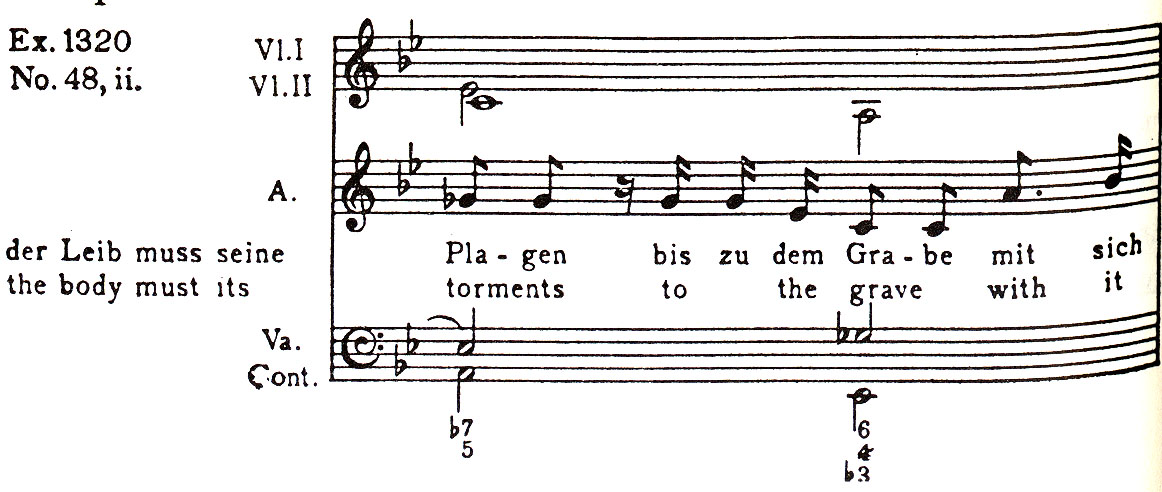
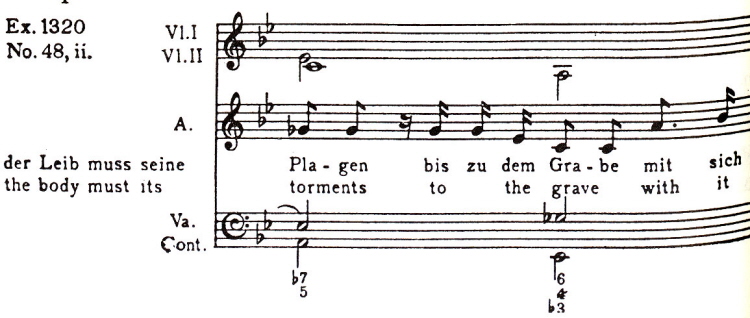
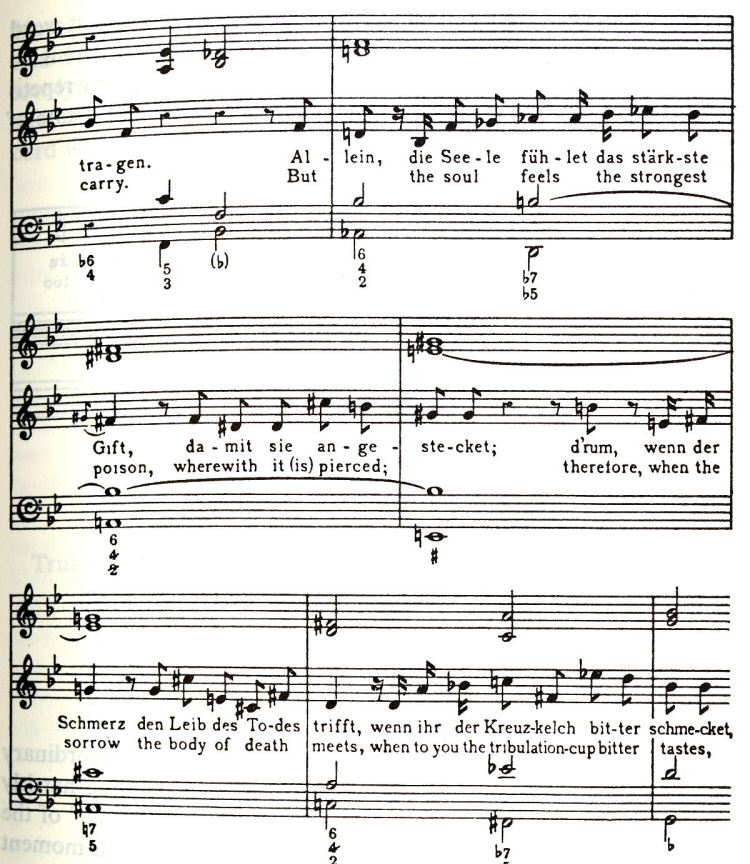
“The world becomes for me a sick- and death-house, the body must its torments up to the grave with it carry. But, the soul feels the strongest poison, wherewith it (is) infected; therefore, when the pain the body of the death seizes, when to it the tribulation-cup bitter tastes so drives it from it a burning sigh out.”
The following fine passage contains many notable features; in bar 1 the sinister continuo drop tells of the sinking of the body into the grave; at the ends of bars 1, 6, and 7 the voice anticipates the next chord; in bar 2 the chord of beat 1 is understood; from bar 1 to 2 is an example of a dissonant bass moving upwards to the dominant of a cadence; from bar 2 to 5 the key changes rapidly from Bb minor to the remote E major; there are false relations in bar 2 to 3, 3 to 4, 6 to 7, where the bassi move surprisingly from A# to C natural ; the chord of bar 3 is treated enharmonically, the alto line of the latter half would therefore read G# G# A# B A# the 6/4/2 in bar 4 resolves on the root position of the major triad of E; the C of the penultimate chord moves up to G in order to allow the vocal D to drop to Bb; the tortuous solo line in bars 6 and 7 suggests the writhing of the body in acute pain.
Ex. 1320: |
|
|
|
|
|
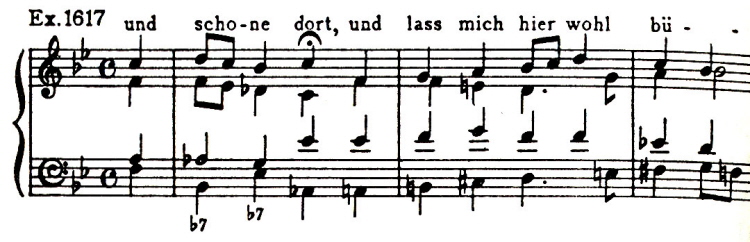
The same vein follows in mvt. 3, for the harmonization of the anonymous tune to stanza 4 of J. Major's (Gross) “Ach Gott und Herr, wie groß und schwer” is one of Bach's most amazing chromatic flights. As Schweitzer points out, its progressions without the text seem extravagant and meaningless, yet they are completely justified by the hymn-verse. The opening reflects that disasters must necessarily follow wrong-doing: “Shall it yea then be, That punishment and pain On sins follow must.” The sufferer then determines to atone fully for all wrong-doing: “So continue here And spare there And let me here well atone.” The last part of the melody, to “büßen” (“atone”), is elongated, and a sweeping bass with dissonant upper parts indicates that peace has been found, and changes the direction of the cantata. The following example shows the boldness of the harmonies:
Ex. 1617: |
|
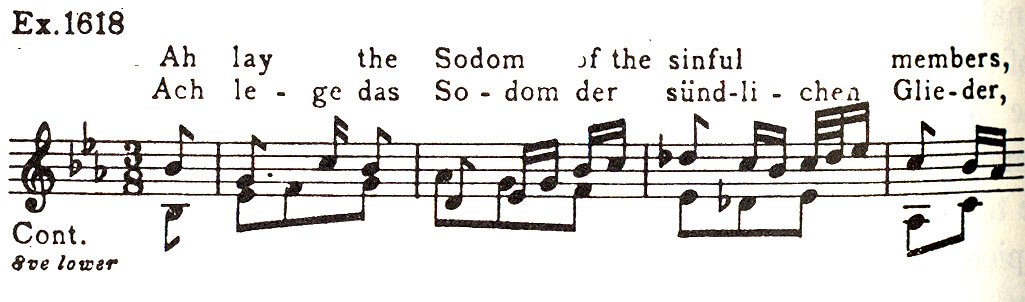
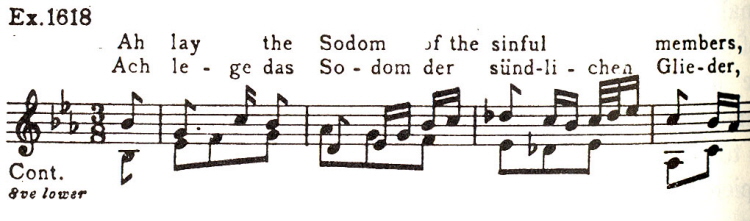
The palsied man is now healed, and goes to his own house; not to his earthly abode, but to the mansions of heaven. The Epistle is Ephesians 4: 22-28, the abandoning of the old man and the putting on of the new, “in righteousness and true holiness,” and the latter part of the libretto is concerned with Paul's admonition. A blissfully happy oboe melody opens the alto aria:
Ex. 1618: |
|
|
|
The text continues : “wofern es dein Wille, zerstöret darnieder!” (“if it (is) Thy will, destroyed below!”) The soul is already clean and prepared for holy Zion. Rapture possesses the new man, he eagerly anticipates the life to be. The continuo never falters in its ‘moto perpetuo;’ only once, before the final ritornello, do quavers cease, and that for a single crotchet. The melody is modified for “Nur schone der Seele, und mache sie rein, um vor dir ein heiliges Zion zu sein” (“ Only spare the soul, and make it clean, in order before Thee a holy Zion to be”), and the oboe plays a rising aspiring idea. The chief melody serves, in addition to this, as oboe counterpoint.
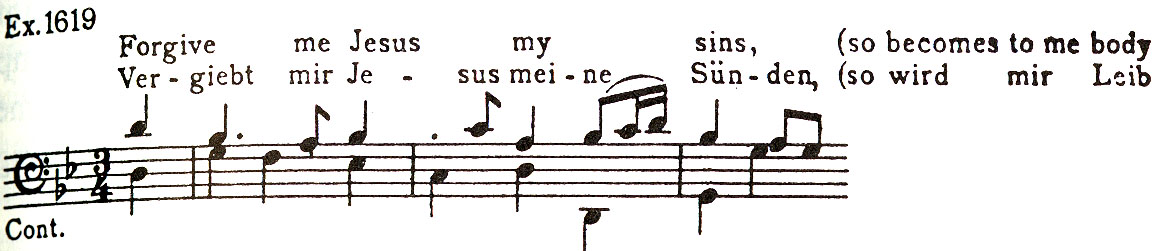
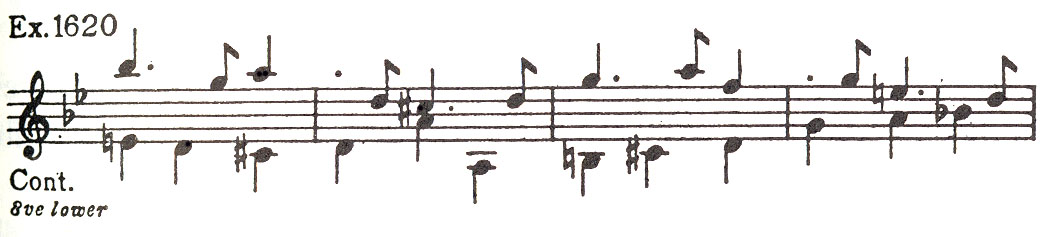
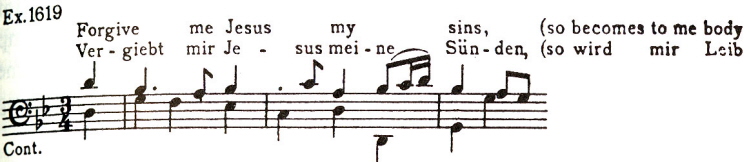
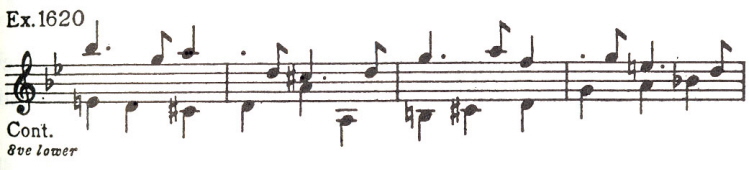
A short tenor ‘recitativo secco’ tells of the healing power of the Savior: “Here however does the Savior's hand among these dead (ones) wonder. Seems thy soul even dead, the body weakened and quite decayed, still becomes for us Jesu's strength known: he knows (how) in spiritual weakness the body healthy, the soul strong to make.” The aria for the same voice, with strings, an oboe doubling Violin I, is truly delightful. Jesus has forgiven all sins, has made body and soul sound, He can raise the dead, He can strengthen the weak. The newly found confidence is expressed by as regular a bassi movement in crotchets as were the quavers in mvt. 4. Above this, lovely melodies buoyantly swing and dance in constant syncopation:
Ex. 1619: |
|
|
|
and
Ex. 1620: |
|
|
|
Only once is the condition of the old man recalled, by a long low Ab, to “Schwachen,” but even then ‘forte’ is indicated for the orchestra, the violpursue the cross-rhythm while the violas and continuo leap in abounding strength. The same type of melody continues throughout: “Er kann die Todten lebend machen, und zeigt sich kräftig in der Schwachen; er hält den längst geschloss'nen Bund: daß wir im Glauben Hilfe finden' (“He can the dead living make, and shows himself powerfully in the weak; he keeps the long-concluded bond: that we in faith help find”). This aria is marked ‘Lento’ in the Breitkopf vocal score, a negation of Bach's obvious intentions; the music depicts the soul dancing in ecstatic bliss.
The chorale, which appeared instrumentally in mvt. 1, now comes ‘tutti,’ magnificently harmonized, with a great upward sweep of the basses where the second line of the verse speaks of betaking oneself to the Savior: “Lord Jesus Christ, sole comfort, To Thee will I myself turn; My heart-sorrow is to Thee well known, Thou canst and wilt it end. In Thy will be it placed, Make it, dear God, as Thee it pleases: Thine am and will I remain.” It is stanza 12.<< |
| |
|
Stephen A. Crist [Oxford Composer Companions]
The following commentary on BWV 48 is taken from “Oxford Composer Companions” [Oxford University Press, 1999]
>>“Ich elender Mensch, wer wird mich erlösen” ('O wretched man that I am! who shall deliver me?'). Cantata, BWV 48, first performed in Leipzig on the 19th Sunday after Trinity (3 October), 1723. Its point of departure is the apostle Paul's cry of anguish (Rom. 7: 24), in which he bewails the spiritual death that results from the flesh's inclination to sin. This text is set as a choral fugue (mvt. 1). The principal motif of the opening ritornello is presented in a striking ascending sequence, which may represent a kind of reaching towards heaven. The first complete fugal exposition (bars 31-44) is preceded by a canonic duet between the upper two voices (bars 13-21), similar to a motto opening in an aria. Simultaneously, the trumpet and oboes begin their presentation of the chorale melody “Herr Jesu Christ, ich schrei zu dir,” also in canon, one phrase at a time. Next, the entire complex (ritornello, motto-like passage, fugue) is repeated. This time, however, the order of vocal entries is changed: the two lower voices sing the motto, and then the voices enter in the order: alto-soprano-tenor-bass, reversing the previous order. The subsequent course of the movement includes two additional points of imitation. As it draws to a close, the trumpet rounds off the canonic presentation of the chorale tune by repeating the first phrase while the oboe sustains the tonic.
Compared with the brief tenor recitative (mvt. 5), accompanied by the continuo alone, the alto recitative (mvt. 2) is quite substantial. The voice and continuo are joined by strings (violins 1 and 2, and viola), which trace in sustained notes the sometimes adventurous harmonic trajectory. Of particular significance is the predominance of sharps (symbolizing the Cross) when the sufferings of this world are compared to the bitter taste of the ' Kreuzkelch ' ('Cross's chalice') (bars 10-13). This passage stands out in especially bold relief in a cantata where all seven movements have key signatures of two or three flats.
There are moments of vivid harmonic colour in the next two movements as well. In mvt. 3, a four-part harmonization of the fourth strophe of the chorale “Ach Gott und Herr,” chromaticism and minor inflection of the tonic and subdominant (bars 2 and 8-9) underscore the meaning of the words 'Straf und Pein' ('punishment and suffering') and ‘büßen' ('to atone for'). Likewise, in the alto aria (mvt. 4), both the lowering of the 3rd in bar 27 and the passage in Bb minor at the end of the A section (immediately before a cadence in the dominant, Bb major) are surely connected with illustrating the word ‘zerstöret' ('destroys').
The boldest harmonic motion, however, is found in the tenor aria (mvt. 6). Since both the opening ritornello and the A section of this modified da capo aria modulate to the dominant, the da capo (A′) and the concluding ritornello had to be adjusted so that the movement would end in the tonic. More surprising, however, is the sequence of tonalities in the B section. The first vocal passage (bars 45-57) modulates to the supertonic minor (A minor), a move outside the normal range of tonal relationships in Bach's arias. But the medial ritornello (bars 58-63) then confounds all expectations by abruptly modulating a semitone upwards to the mediant, B major. This remarkable passage is nothing less than a musical representation of resurrection, suggested by the words 'Er kann die Toten lebend machen' ('He can raise the dead').
A simple four-part chorale, with the same melody as in the opening chorus, closes the cantata. SAC
SAC Stephen A. Crist is associate professor of music at Emory University. His articles have appeared in Early Music, Bach Studies, Bach Perspectives, The Cambridge Companion to Bach, and elsewhere. He has also published a facsimile edition of a Low German hymnal dating from Luther's time and is working on a book on the Bach arias. He is secretary and treasurer of the American Bach Society.<< |
| |
|
Albert Schweitzer [J. S. Bach]
Albert Schweitzer, in his “J. S. Bach” [Breitkopf & Härtel, 1908-1911 (translated by Ernest Newman and available from Dover Publications, Inc. New York since 1966) comments on BWV 48 as follows:
>>From the standpoint of pure music Bach’s harmonizations are wholly enigmatic, for he does not work upon a tonal succession that in itself forms an aesthetic whole, but follows the lead of the poetry and the verbal expression. How far he lets these take him from the natural principles of pure composition may be seen from his harmonization of “Solls ja so sein, daß Straf und Pein” (the melody is that of “Ach Gott und Herr”), in the cantata “Ich elender Mensch, wer wird mich erlösen (No. 48), which as pure music is indeed intolerable, Bach’s purpose being to express all the wild grief for sin that is suggested in the words. Vol. 2, p. 31
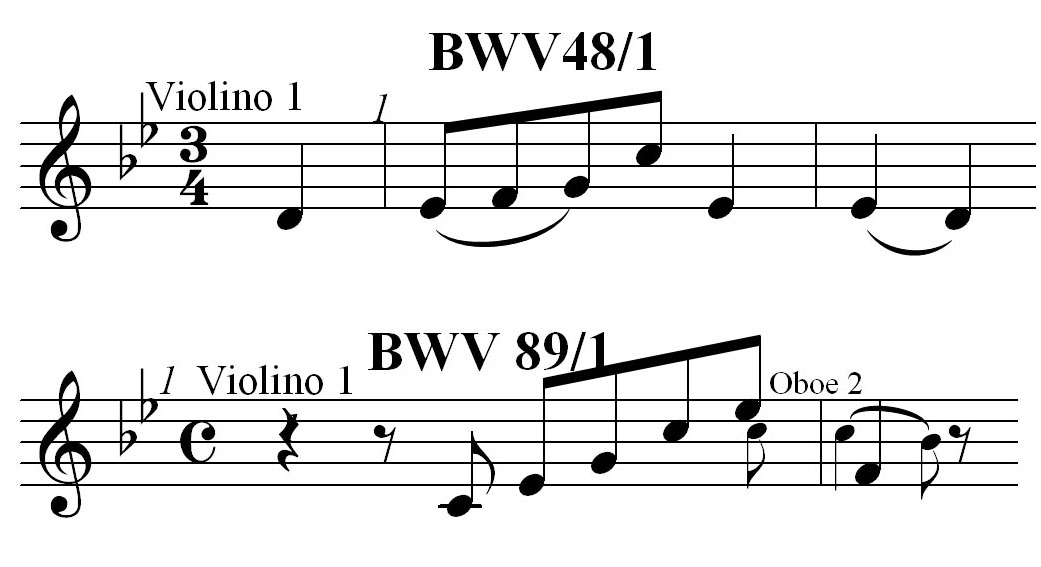
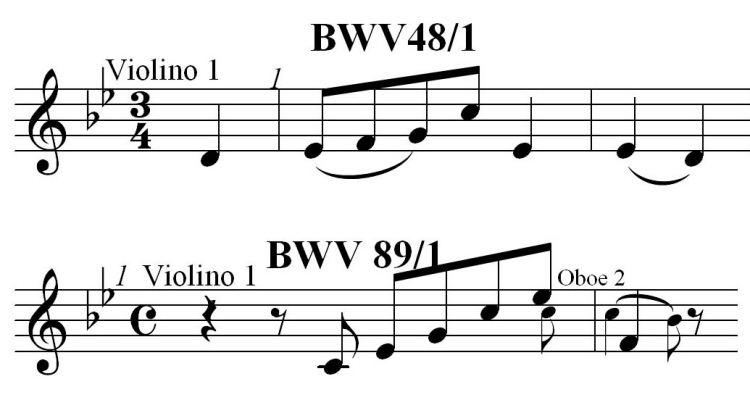
That the theme in the violins (in BWV 89, “Was soll ich aus dir machen, Ephraim”) is meant to suggest the sorrowful question is proved by the first chorus of the cantata “Ich elender Mensch, wer wird mich erlösen” BWV 48, where the orchestral accompaniment is constructed upon a theme that is almost identical with that of “Was soll ich aus dir machen, Ephraim?” p. 258 |
|
|
|
Bach wrote the cantata “Ich elender Mensch, wer wird mich erlösen von dem Leibe diese Todes” (BWV 48) upon the Gospel for the 19th Sunday after Trinity (Matthew 9: 1-9), in which Jesus heals the man sick of the palsy and forgives his sins. While the chorus sings the despairing words from the 7th chapter of Romans that give the cantata its title – “Oh wretched man that I am! Who shall deliver me from the body of this death?” – the orchestral accompaniment incessantly repeats the sorrowful question – |
|

|
|
while the trumpets and oboes play, in canon, the chorale “Herr Jesu Christ, ich schrei zu dir.”
The full sense of grief is given in the sinister harmonies of the chorale “Soll’s ja so sein, daß Straf’ und Pein auf Sünden folgen müssen;” but it exhausts itself at the words “Büssen” (“atonement”), with which the strophe ends. In the succeeding prayer to Jesus, “Ach lege das Sodom der sünclichen Glieder, sofern es dein Wille, zerstöret danieder,” sorrow is quite overcome. The music breathes a serene longing for death. The theme anticipates the joyous and passionate animation of the following aria, “Vergib mir Jesus meine Sünden, so wird mir Leib und Seel’ gesund.” The theme of this last mvt. commences thus – |
|

|
|
The last aria but one. therefore, should not be taken too slowly; the final aria can hardly be taken too quickly. It must be sung in a kind of wild ecstasy – no ‘rallentandi’ in the cadences and no ‘diminuendi’ in the transitions from ‘forte’ to ‘piano.’ That Bac’s idea was that of hast almost breaking into a dance is shown by the fact that in the cantata “O Ewigkeit, du Donnerwort (BWV 20) he employs similar music, but in the minor, to express the violent horror of the words “O Mensch, errette deine Seele, entfliehe Satans Sklaverei und mache deine Seele frei” (“Oh man, save they soul; fly from Satan’s bondage and make thy soul free.” |
|

|
|
pp. 341-343 |
| |
|
|