|
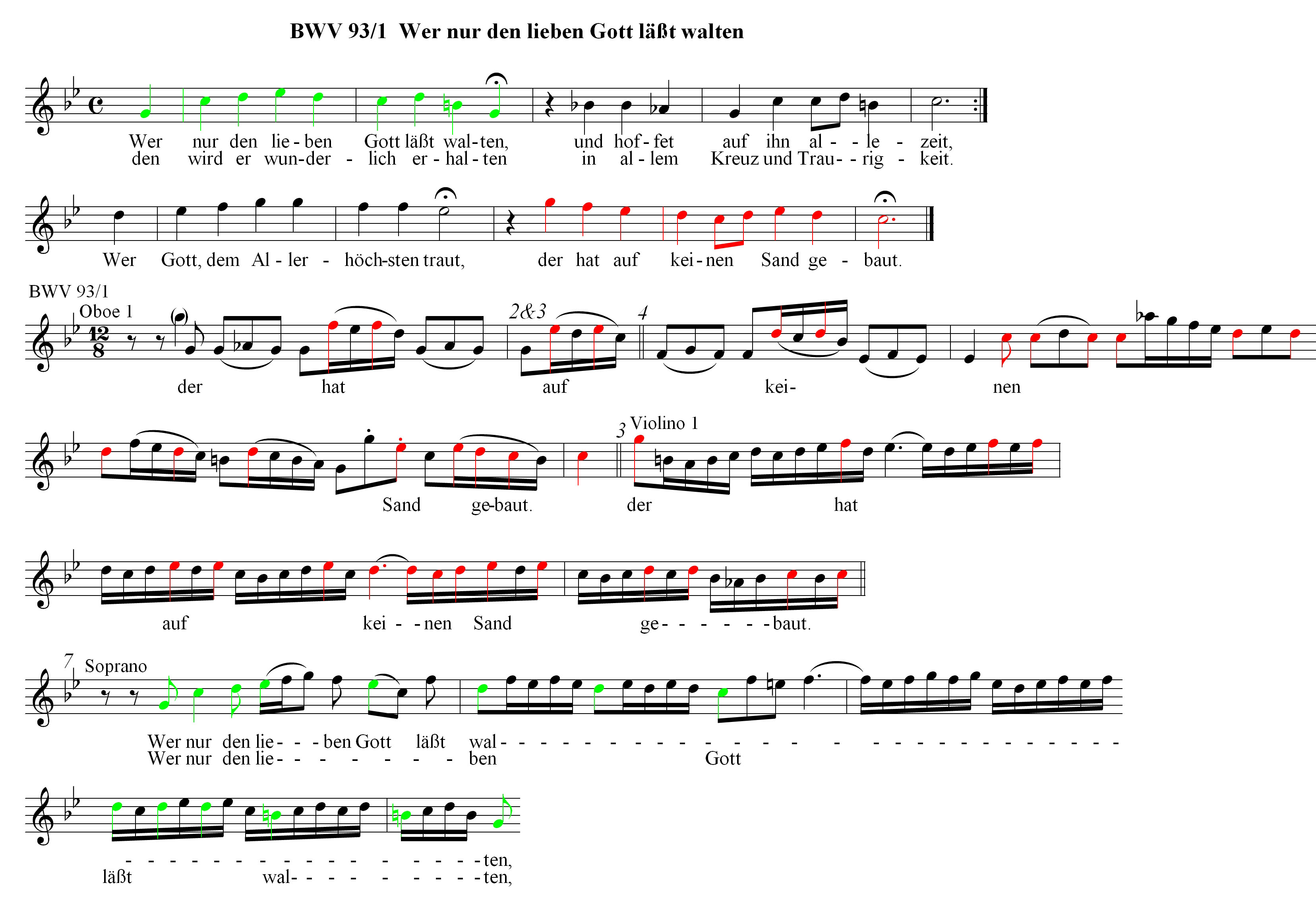
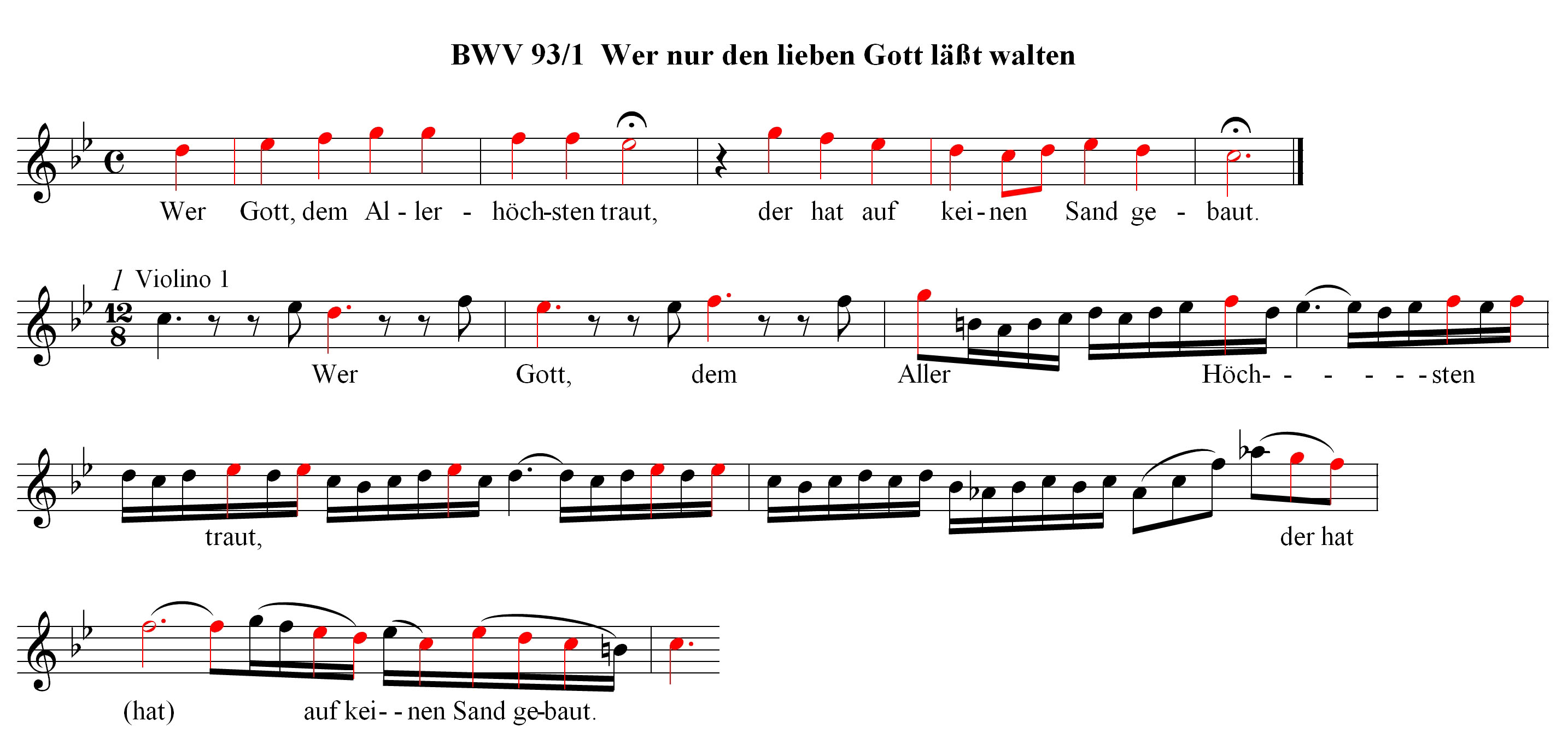
To obtain a greater integration of the instrumental ritornello with the chorale as presented by the choir, Bach uses a florid variation of portions of the chorale melody to elicit a unified presentation. In a very early cantata, BWV 4 "Christ lag in Todesbanden", Bach has the purely orchestral mvt. "Sinfonia" provide hints of the chorale melody to follow. In BWV 93/Mvt. 1, the ritornello also serves the purpose of preparing the listener with musical material and/or motifs which are based upon portions of the chorale melody (Wer nur den lieben Gott läßt walten). Contrary to Alfred Dürr's observation (I am indebted to Dürr for pointing out this phenomenon in other chorale cantatas in his book on the cantatas {Bärenreiter, 1995}), regarding the ritornelli in BWV 93/1 which he claims on p. 481 have a unity within themselves but are unrelated to or independent of the chorale itself ("thematisch einheitliche, choralunabhängige Instrumentalritornelle"), I have detected that both the first oboe and first violin parts contain the final line of the chorale "der hat auf keinen Sand gebaut" in a form of improvisatory elaboration or variation. This seems to further substantiate the importance of this phrase as the kernel idea from which Bach evolved numerous aspects of musical form and structure which affect the entire mvt.
The last example given derives from the first entrance of the soprano part preceding the formal presentation of the cantus firmus. This concertante (resembling the flourishes of a solo instrument) introduction of the first line of the chorale melody announces the first 4 notes of the melody in quick succession after which coloratura passages follow. It is within the context of these coloratura passages that Bach continues, in beautifully elaborated fashion, beyond the initial short quotation of the melody to complete the entire line "Wer nur den lieben Gott läßt walten". |
|
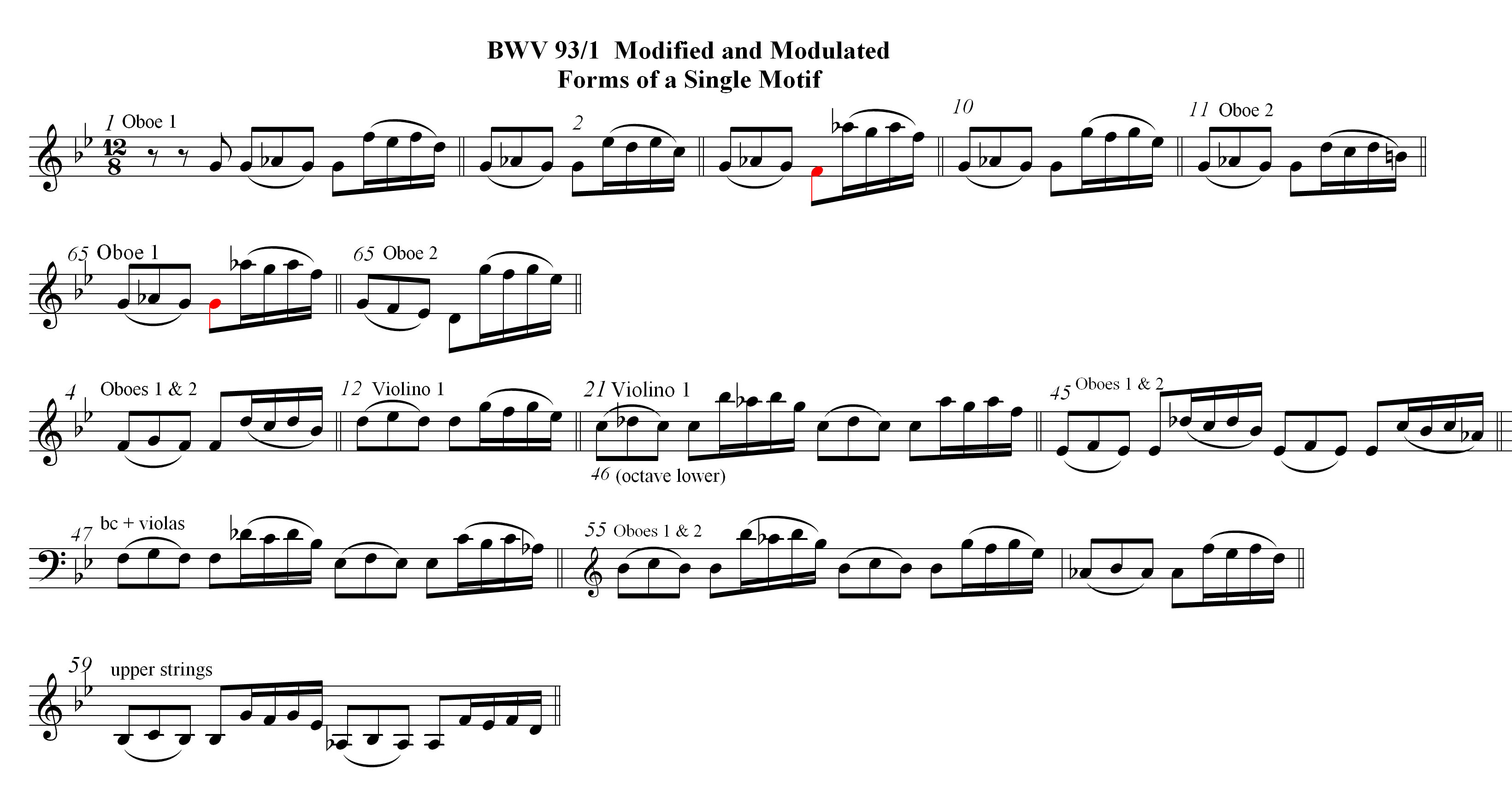
A single motif played primarily by the oboes undergoes various transformations in regard to the size of the upward leap (up a fourth to beyond an octave leap) While there may be some significance attached to some of the extreme leaps, the others are mainly perceived by the listener as being the same. These leaps (the last three lines of examples) also occur modulated to different keys as necessary, where other instruments share in the presentation of this motif. |