|
'The College of the Holy and Undivided Trinity' was founded in 1546 by King Henry VIII. He amalgamated two ancient foundations which stood on the site of the present Great Court: The King's Hall, established by Edward II in 1317 and incorporated by Edward III in 1337; and Michaelhouse, founded in 1324 by Hervey de Stanton, Chief Justice and Chancellor of the Exchequer to Edward II. To the revenue of these medieval colleges, Henry added other endowments, including some from the property of the dissolved monasteries.
Trinity's choral associations reach back to this early fourteenth-century period. Chapel Royal choristers, on leaving the Court, customarily entered The King's Hall (Chaucer's 'Solar Hall' in The Canterbury Tales) to continue their academic studies alongside other undergraduates training for service in the royal administration. A considerable proportion of the pensioners and scholars the 'King's Childer' admitted to The King's Hall from the date of its foundation until the end of Henry V's reign were ex-choristers.
The constitution of the medieval chapel choir remains obscure, but the choral foundation Mary Tudor established for Trinity in 1553 ten choristers, six lay clerks, four clerks, four priests, an organist and a schoolmaster survived essentially unchanged for well over three hundred years. Among the musicians associated with the choir during this time were the Tudor composers Thomas Preston, Robert White, a cantor during the 1550s, and John Hilton, organist and Master of the Choristers from 1594 to 1609. The theorist Thomas Mace was appointed a 'singing-man' in 1635 during the time that Robert Ramsey was in charge of the choir. George Loosemore became organist at the Restoration. Later choirmasters included James Kent and John Randall during the eighteenth century and Thomas Attwood Walmisley during the nineteenth.
At the turn of the present century, shortly after Ralph Vaughan Williams had graduated at Trinity and Alan Gray had succeeded Stanford as organist, the College choir school closed down. Thereafter, a choir of boy trebles (drawn from a local grammar school) and lay clerks (some of whom shared their duties with the choirs of King's and St John's Colleges) continued the regular pattern of choral services until the 1950's. This traditionally-constituted body was then replaced by a choir of undergraduate tenors and basses when Raymond Leppard became Director of Music.
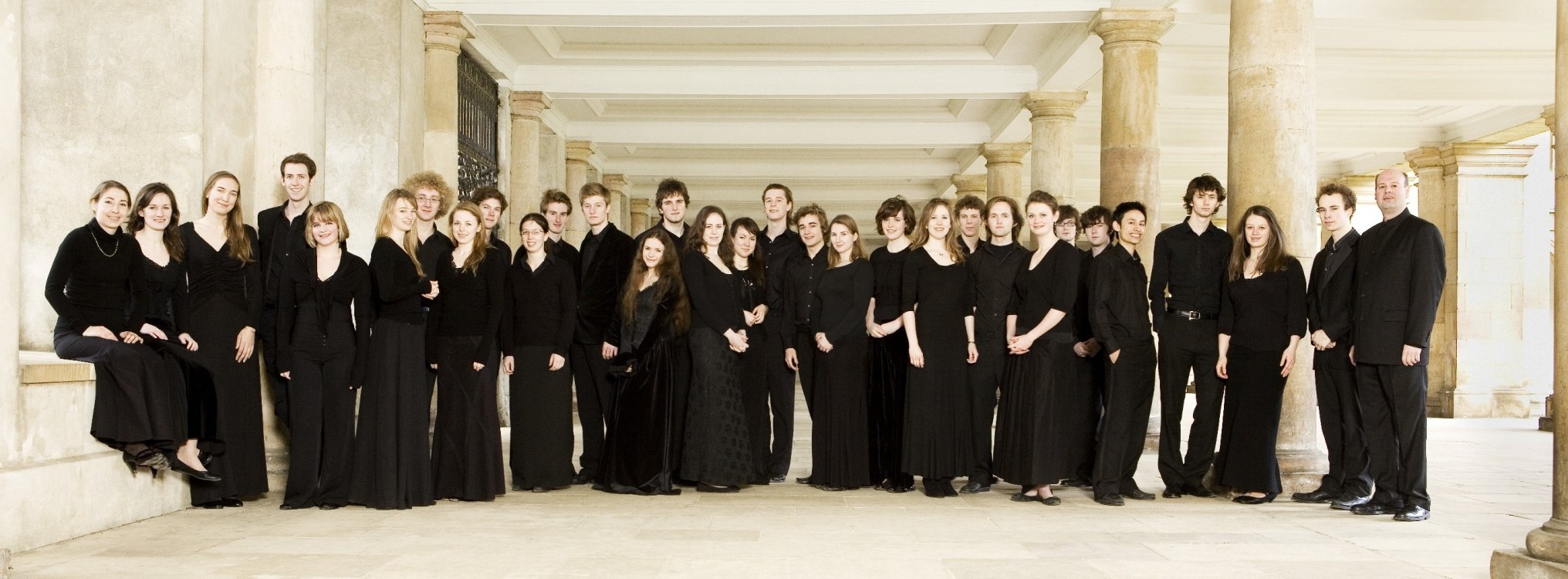
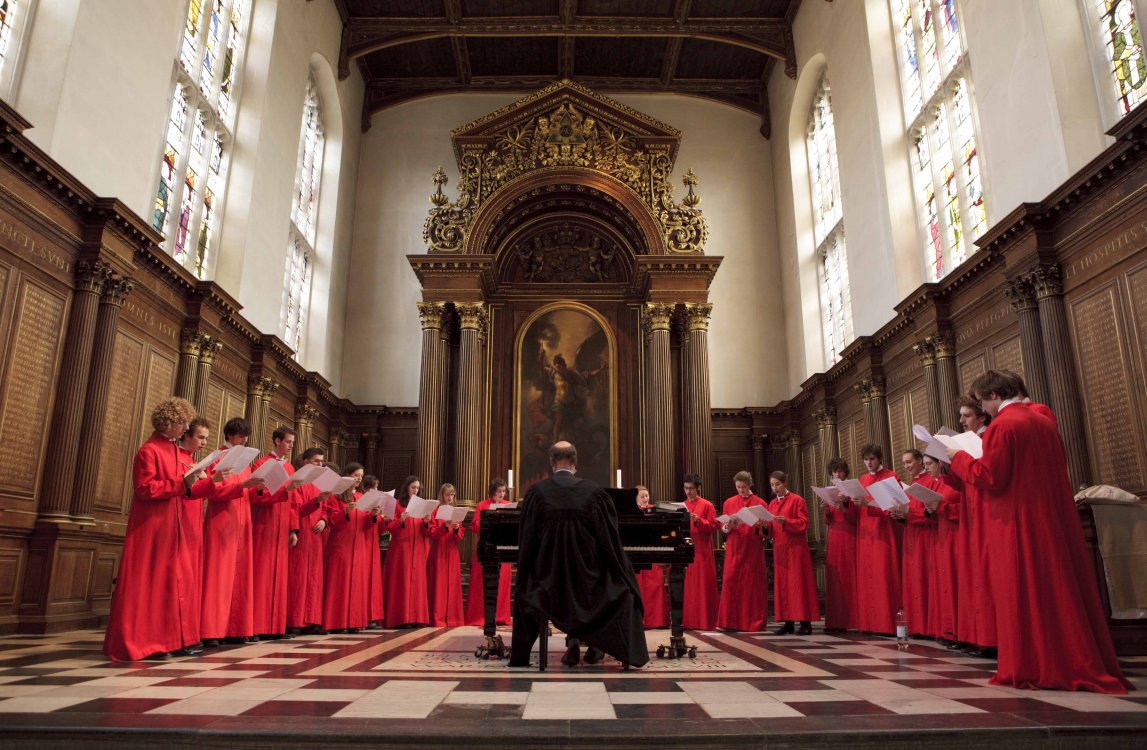
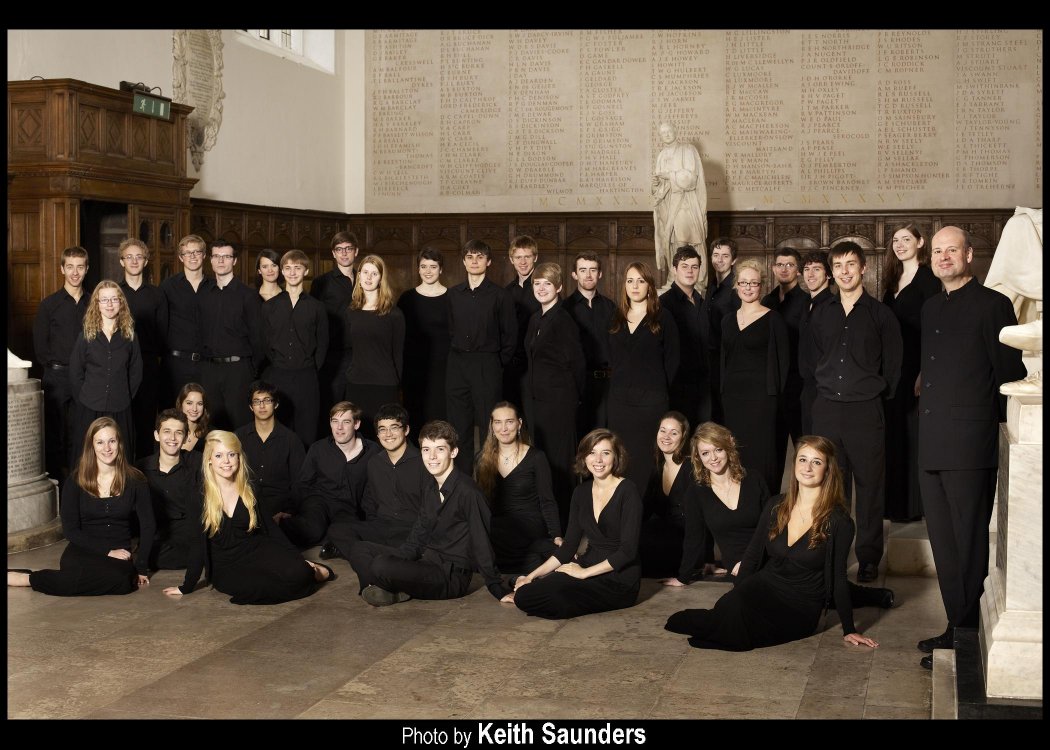
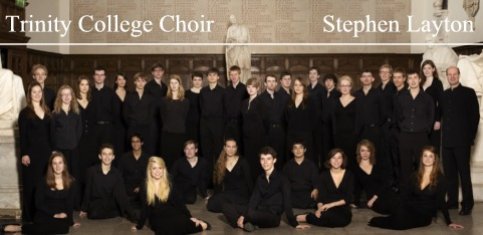
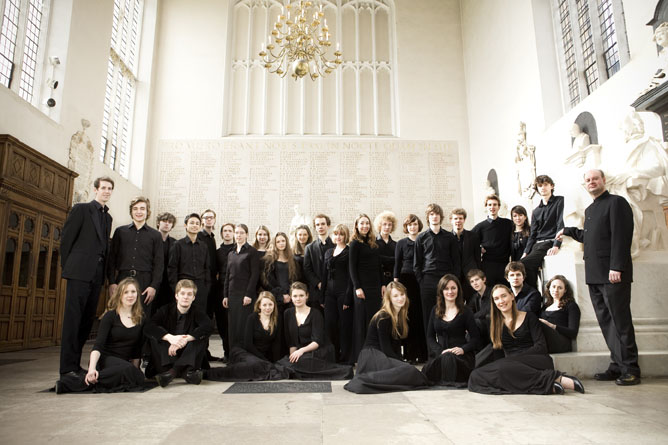
Trinity's mixed choir, comprising up to thirty choral scholars (who study a wide range of academic subjects) was formed by the present Organist and Director of Music, Richard Marlow, in 1982, a few years after the admission of women undergraduates to the College. The choristers' duties include singing four weekly services in Chapel during term-time and chanting Grace from the Minstrels' Gallery in Hall at College Feasts. At noon on the final Sunday of each academic year there is an outdoor concert of music for voices and brass performed antiphonally from the three gateway towers of the Great Court; later, at twilight, from punts moored at Trinity Backs, the choir sings the traditional River Concert that inaugurates May Week at Cambridge.
Since it was established in 1982, the mixed choir has produced more than three dozen commercial recordings, enthusiastically received by critics and public alike. Annual radio transmissions for the BBC include Choral Evensong and special seasonal sequences such as the College's Epiphany Carol Service broadcast every January. BBC television has also recorded the choir, including a presentation of the Advent Carol Service.
In addition to giving regular concerts in London and Cambridge, the Choir sings recitals and services during some summer vacations in various parish churches mostly in the north of England of which the College is patron. Three or more foreign tours take place each year. These have included visits to several European countries as well as to Canada, Hong Kong, Japan, Namibia, South Africa, Taiwan, Zimbabwe and the USA. |
|
Rachel Ambrose Evans
Sumei Bao-Smith
Rachel Bennett
Zoë Brown
Eleanor Burke
Catriona Casha
Anna Cavaliero
Eugenie Cheng
Helen Deeming
Matilda Dichmont
Emily Dickens
Ralph Allwood
Paula Downes
Fiona Fraser
Annabel Green
Katherine Gregory
Joanna Harris
Sarah Henderson
Alison Hill
Susannah Hill [MB]
Natasha Hogarth
Hannah King
Elisabeth Krizek
Jade Lam
Susanna Mackay
Eleanor Major
Dominika Mak
Hannah Malkin
Anita Monserrat
Helena Moore
Helena Paish
Bethany Partridge
Hannah Partridge
Mary Price
Elizabeth Robbings
Imogen Russell
Julia St Clair
Holly Smith
Annie Stewart
Lucy Sun
Lucy Taylor
Ellie Tobin
Madeleine Todd
Faith Waddell
Georgia Way
Catherine White
Rebecca Williams
Joanna Willmott
Maryam Zaidi
Rosemary Zhang
Faye Zhao |
Michael Allsop
Catherine Arnold
Kate Apley
Emily Attree
Constance Ayrton
Louise Ayrton
Thomas Blunt
Alastair Brookshaw
Madeline Bryan
Helen Charlston
Rachel Coombs
Karolina Csathy
Helen Daniels
Gabrielle Desalbres
Hana Lily Edwards
Max Entwisle
Ruth Gibbins
Michael Hamway
Abigail Horton
Anna Jackson
Guy James
Joseph Littlewood
Amy Lyddon-Towl
Natalie C. Manning
Giverny McAndry
Anita Monserrat
Lucy Prendergast
Hannah Robinson
Adrian Sanders
Saachi Sen
Miriam Shovel
Alex Thow
Meg Tong
Ted Tregear
Nina Vinther
Jonathan Watts
Sophie Williams |
Hiroshi Amako
Daniel Atkinson
Tom Baarda
Archie Bott
Gwilym Bowen
Paul Casey
Oliver Clarke
Sebastian Cook
Ryan Court
Edward Cunningham
Joseph Deery
Alexander Gebhard
Jonathon Goldstone
James Greenwood
Samuel Hewitt
Henry Hole
Gopal Kambo
Christopher Landau
Joseph Littlewood
Adam Long
Barnaby Martin
Oliver Mercer
Roshan Patel
Thomas Pocock
Cameron Richardson-Eames
Nicholas Richardson-Waldin
Jamie Roberts
Silas Sanders
Jamie Shepherd
Matt Smith
Matthew Smith
Andrew Tortise
Jadd Virji
Zachariah Yarrow |
Thomas Allwood
Stephen Beale
Theo Berenzweig
David Buckley
Jack Butterworth
Ian Cheung
Jeremy Cole
Michael Craddock
Patrick Donnelly
Stephen Garner
James Gooding
Sam Gray
Harry Guthrie
Christopher Howarth
Brian Lee
Charles Lewis
Christopher Moore
Angus McCarey
Ben Mortishire-Smith
George Nairac
Sam Newton
Joel Nulsen
Oscar Osicki
Jonathan Pacey
Owain Park
Alex Patel
Frankie Postles
Krishnan Ram-Prasad
Benedict Randall Shaw
Florian Störtz
Tudor Thomas
Benjamin Thurlow
Luke Warren
Laurence Williams
Angus Wilson
William Winning
Anthony Woodman
Nick Wright |