|
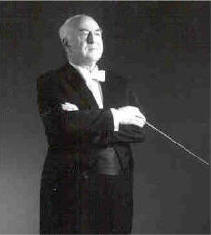
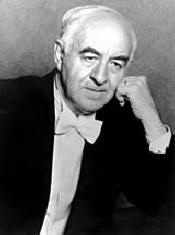
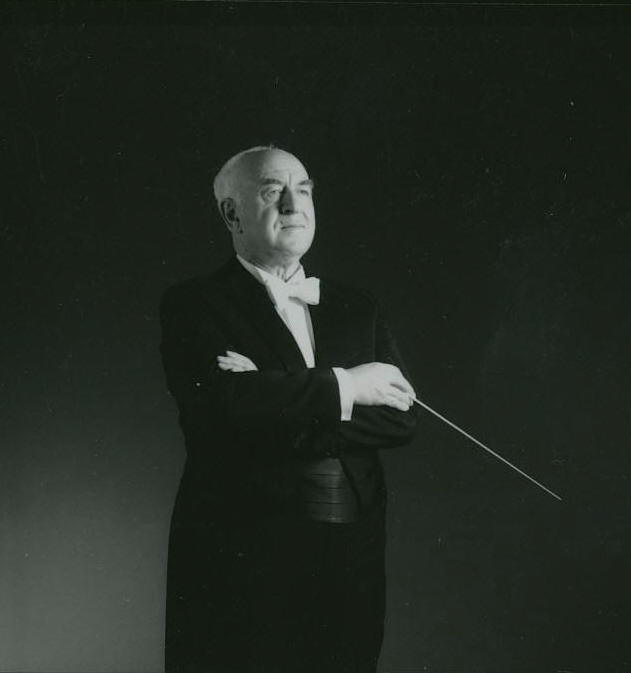
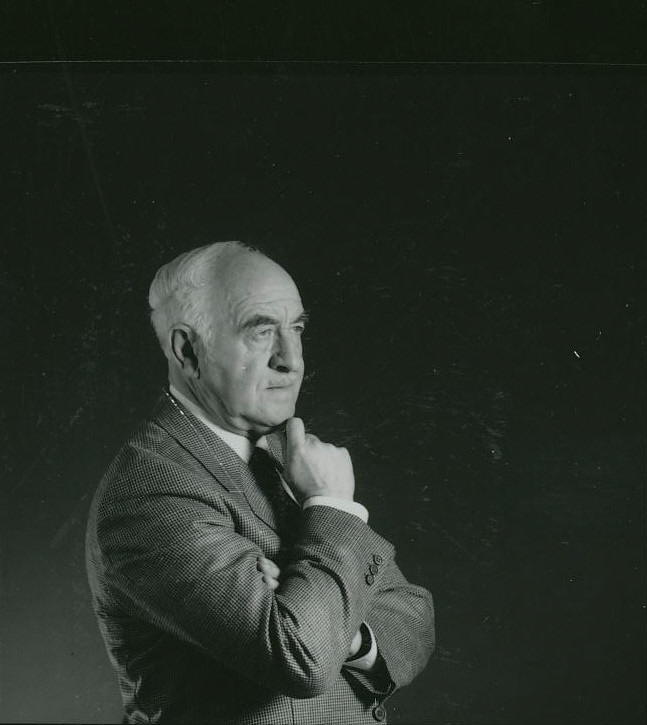
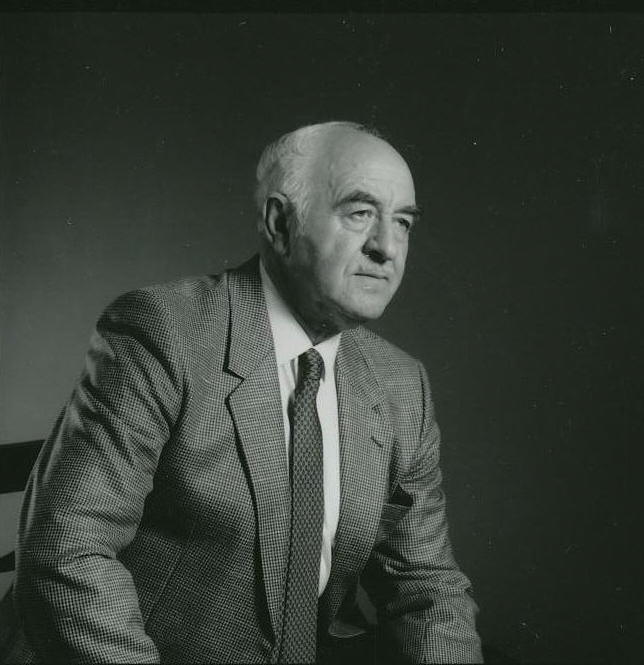
The Russian conductor, Rudolf [Rudolph] Barshai [Borisovich], studied violin at the Moscow Conservatory with Lev Zeitlin and viola with Borisovsky, graduating in 1948. He also studied conducting with Ilya Musin in Leningrad.
While still a student, Rudolf Barshai developed such enthusiasm for string quartet playing that he moved from the violin to the viola, for he wanted to found a first-rate quartet. He subsequently became a founding member of both the Borodin Quartet and the Tchaikovsky Quartet. This was also the period when his friendship with Dmitri Shostakovich began. And it was Barshai who stood up to massive bureaucratic resistance and, in close creative collaboration with the composer, gave the first performance of D. Shostakovich's 14th Symphony with his orchestra in 1969.
In 1955 Rudolf Barshai organized the Moscow Chamber Orchestra, which became extremely successful. Many Soviet composers wrote works for it. It was he who first acquainted Russian audiences with Baroque music and chamber orchestra literature. He is surely the one most closely associated with the contemporary composers whose music he conducts. He studied composition with D. Shostakovich, discussed orchestration with Prokofiev, and established himself as a forceful advocate of the music of Alexander Lokshin. Not only did he commission works from composers, he arranged their pieces as well. Probably his best known orchestration is the Chamber Symphony after D. Shostakovich's Eighth String Quartet. As Barshai worked with all of those composers, his interpretation of 20th century Russian music possesses unparalleled authenticity. He partnered many of them, often performing D. Shostakovich's music with the composer at the piano: not only as a conductor but also as a violist, for Barshai was an incomparable master of the viola. He regularly played chamber music with David Oistrakh and Sviatoslav Richter, Emil Gilels and Leonid Kogan, Mstislav Rostropovich and Yehudi Menuhin. For decades Sviatoslav Richter, perpetually dissatisfied with half-hearted “orchestral accompaniment”, would work with only two conductors: Benjamin Britten and Rudolf Barshai.
In 1976 Rudolf Barshai emigrated to Israel, and led the Israel Chamber Orchestra in Tel Aviv until 1981. He also appeared as a guest conductor in Europe, the USA, and Japan. From 1982 to 1988 he was principal conductor and artistic adviser of the Bournemouth Symphony Orchestra. He was also music director of the Vancouver (B.C.) Symphony Orchestra (1985-1987) and principal guest conductor of the Orchestre National de France in Paris (from 1987).
Rudolf Barshai conducted the great orchestras of the world in classical repertoire ranging from J.S. Bach and W.A. Mozart, Schubert and Johannes Brahms, to Gustav Mahler and D. Shostakovich. He directed the Vienna Symphony Orchestra, London Symphony Orchestra, BBC Symphony Orchestra, Philharmonia Orchestra, Orchestre National de France, Orchestre de Paris, Deutsches Symphonieorchester Berlin and Bavarian Radio Symphony, plus great many other orchestras in Europe, Asia and the USA. The University of Southampton awarded him an honorary doctorate of music.
Although Rudolf Barshai made countless recordings - the most important of his current projects is a complete cycle of the 15 D. Shostakovich symphonies with the WDR Sinfonieorchester Köln - he always kept aloof from the media circus. Eminently serious, he shuned any form of glitzy glamour, and was not one of the jet-setting conductors that constantly dash round the world performing under-rehearsed programs. Barshai's name stands for the masterful realization of the composer's will; a principled advocate of their ideas, he dedicated his legendary ability to rapidly mould an orchestra’s sound to his conceptions to one sole purpose: achieving clarity and focus. But then with astonishing results. Few interpreters today can so powerfully bring out the meaning of a composition purely on the basis of the score. Barshai needed no additional ingredients to make a piece "interesting"; he showed what the music itself had to say. His readings of the L.v. Beethoven symphonies are unique for their clarity of form and forceful architecture. On hearing Barshai's interpretation of L.v. Beethoven's Eroica, D. Shostakovich remarked: “We haven't heard Beethoven like that since Klemperer." And indeed, Barshai's music making could most easily be compared to Otto Klemperer's. An unerring stylistic instinct allows Barshai to go to the very heart of a G. Mahler symphony and to answer all the questions G. Mahler readings so often leave open when conductors pursue only the superficial effects that are so easy to realize. One of the reasons for this is surely the training Barshai received in Moscow in the 1940s and 1960s - the training that produced all the famous Russian musicians that have helped shape the second half of our century. Barshai began his violin studies at the Moscow Conservatory with the legendary Lev Zeitlin. Zeitlin had been the star pupil of Leopold Auer, "father" of the Russian school of violin playing. An Austrian, Auer had brought the authentic spirit of the Viennese classical period to Russia.
Rudolf Barshai continually seeked opportunities to engage in creative work of his own as well, composing, orchestrating and arranging, always on a quest for new sounds. He arranged further string quartets by D. Shostakovich for small orchestra. In the year 2000 he concluded a project that has occupied him for many years: the completion and orchestration of G. Mahler's Tenth Symphony, which had thus far existed only in creditable performing editions. The premiere of the Barshai version undoubtedly constituted a new and meaningful addition to the symphonic repertoire.
In 1954, Rudolf Barshai married Anna Martinson, a Russian painter and costume designer, and daughter of the Soviet comic Sergey Martinson. They have a son, Walter Barshai, born June 6, 1955. After their divorce in 1963 and his marriage to a Japanese translator, Teruko Soda (son Takeshi, b January 10, 1967), he married concert organist Elena Raskova. Barshai resided in Switzerland until his death. |