|
Cantata BWV 108
Es ist euch gut, daß ich hingehe
Examples from the Score |
|
Mvt. 1 Basso Solo | Mvt. 2 Tenor Aria | Mvt. 3 Tenor Recitative | Mvt. 4 Chorus | Mvt. 5 Alto Aria | Mvt. 6 Chorale |
| |
|
Mvt. 1 Basso Solo |
|
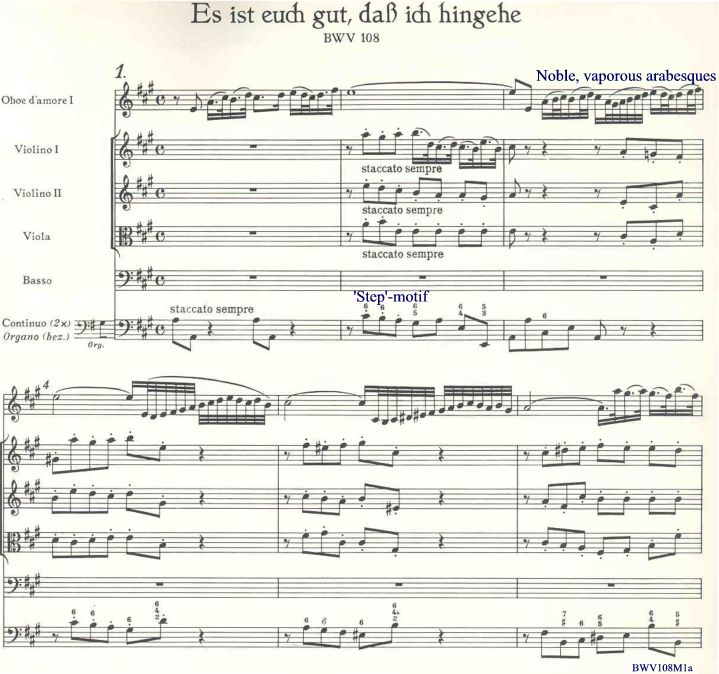
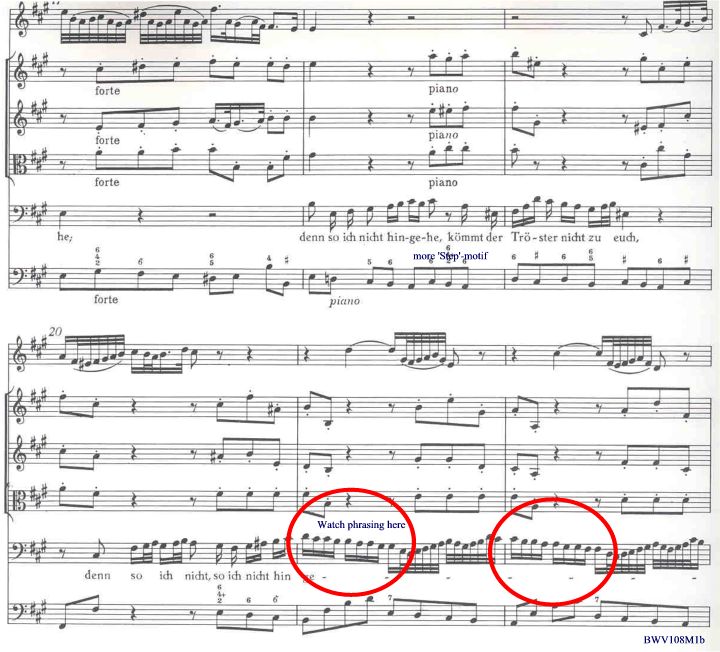
There are two examples here to illustrate separate instances of the 'step'-motif which Schweitzer discovered. Also the arabesques he described can be viewed in the score. |
|
|
|
The second example |
|
|
|
shows in addition to the 'step'-motif in the first example, an unmarked passage, unmarked by Bach as far as the phrasing goes, which allows Harnoncourt to introduce his own rather extreme version of phrasing. As usual, Harnoncourt 'pushes the envelope,' thereby reducing what might be considered an insight on the conductor's part, to an unmusical application of musical interpretation. |
| |
|
Mvt. 2 Tenor Aria |
|
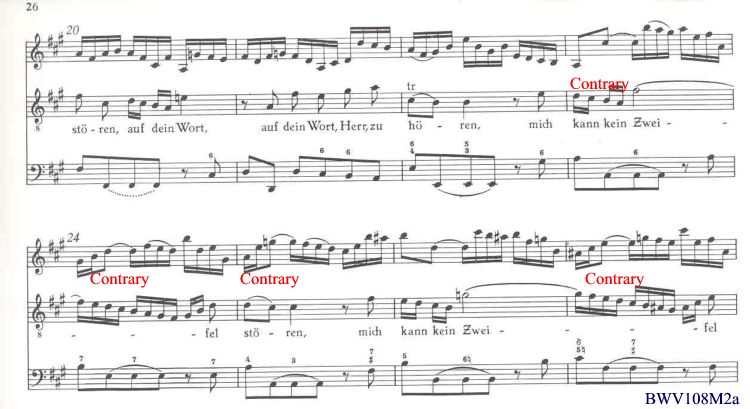
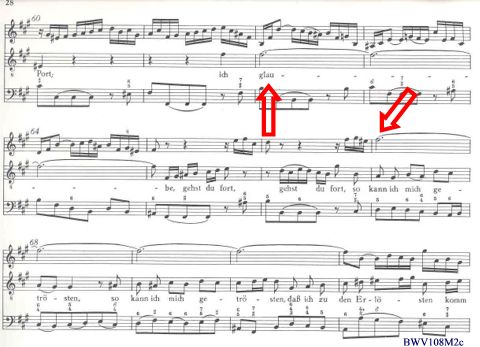
The key word here is "Zweifel" ("doubt") which causes the violin and voice to work against each other with many examples of contrary motion between these two voices at the beginning of the mvt. |
|
|
|
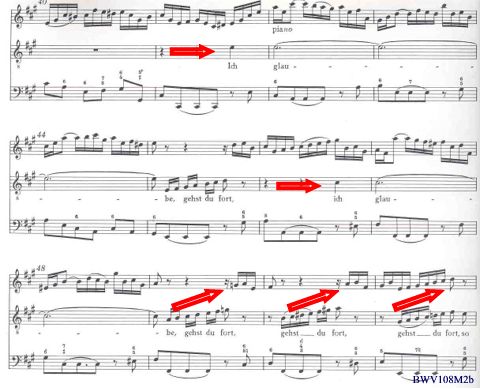
The second example shows two examples of the long, held note on the word "glaube" ("believe") as a contrast to "Zweifel." Also visible are the recurring upward sweeping movements on the words, "gehst du fort" ("if you go away, up to heaven.") |
|
|
|
An interesting transition from the contrary motion of the violin occurs after the final vocal statement of "ich glaube," a transition, first of all, to imitate the voice with a long, held note |
|
|
|
after having continued in many examples of contrary motion, |
|

|
|
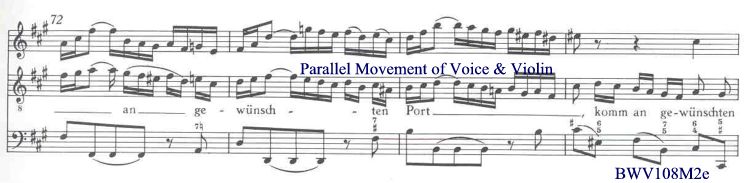
to a place toward the end of the aria, when the movement of voice and violin move in parallel fashion. |
|
|
| |
|
Mvt. 3 Tenor Recitative |
|
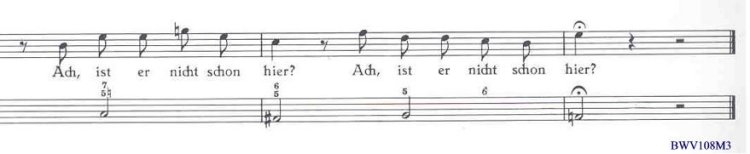
At the end of the recitative there are two remarkable instances of the same question being asked each time differently. There are some very good interpretations given by tenors already mentioned. Performed expressively and correctly, the bridge to the next mvt is almost imperceptible and the answer follows immediately with strong confidence. |
|
|
| |
|
Mvt. 4 Chorus |
|
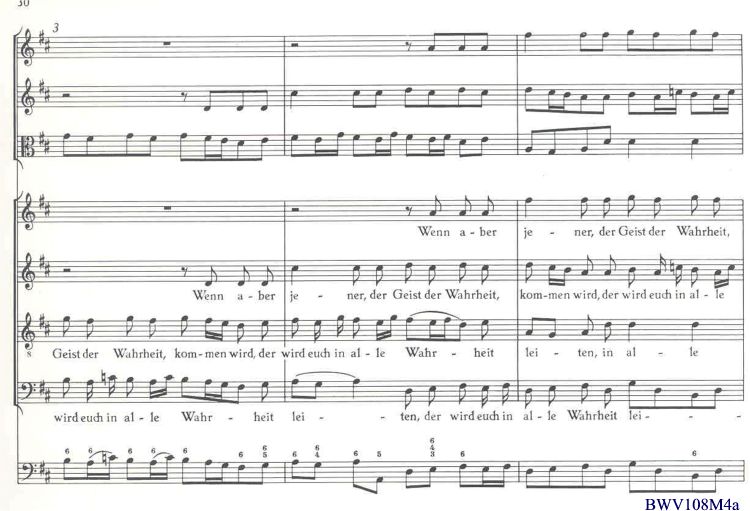
One example is given for the beginning, or near beginning of each section of the fugal chorus. |
|
|
|
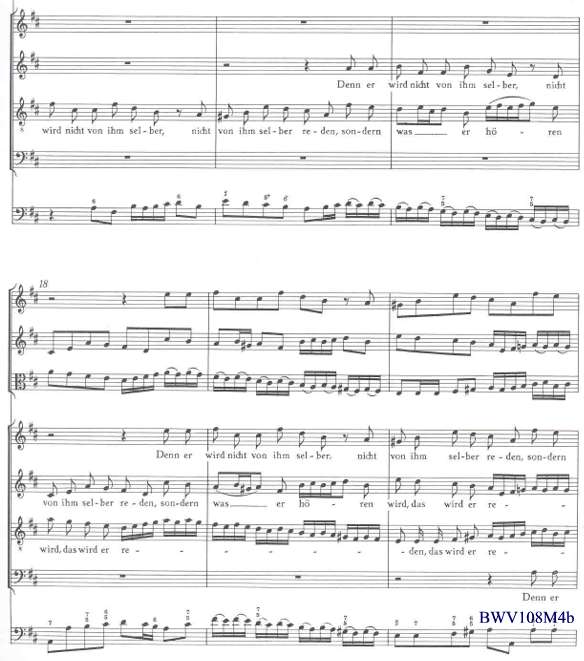
|
|
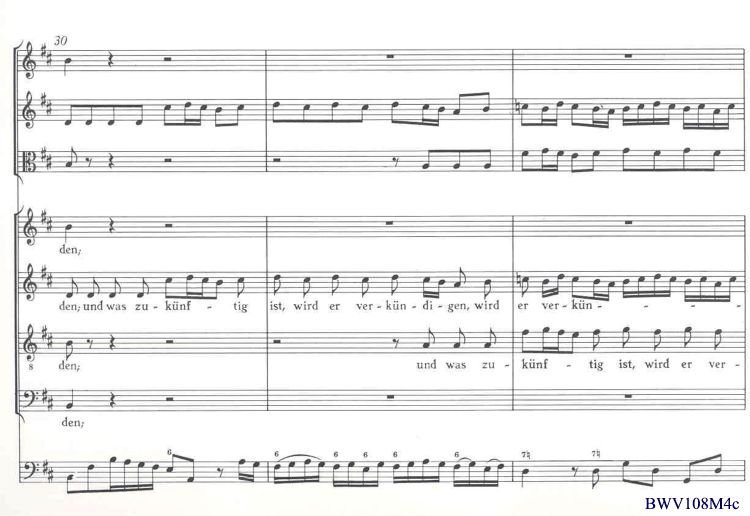
|
| |
|
Mvt. 5 Alto Aria |
|
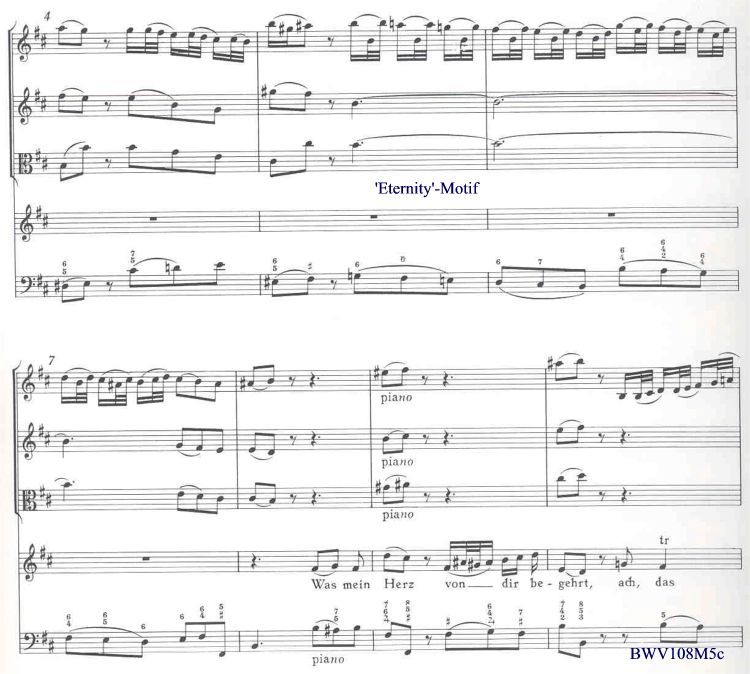
Here are three examples of the 'eternity'-motif |
|
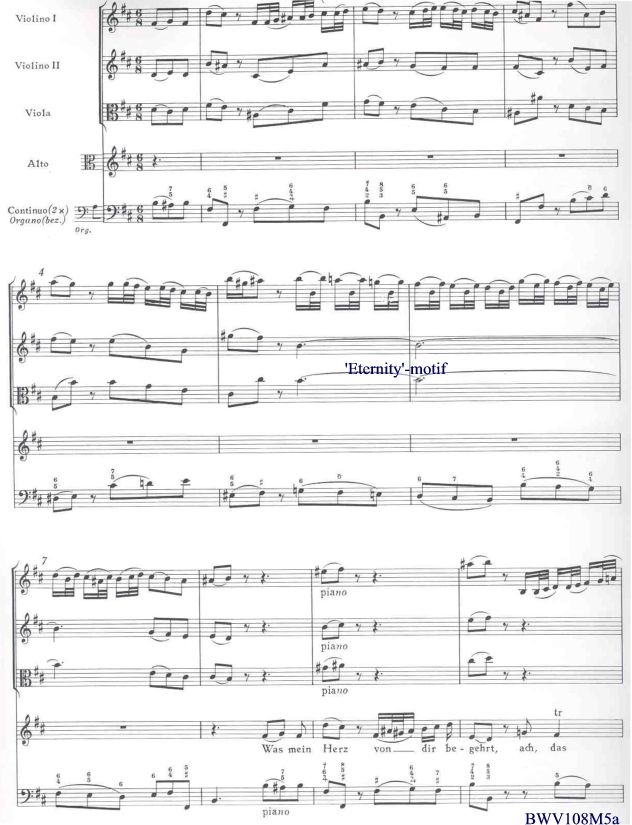
|
|
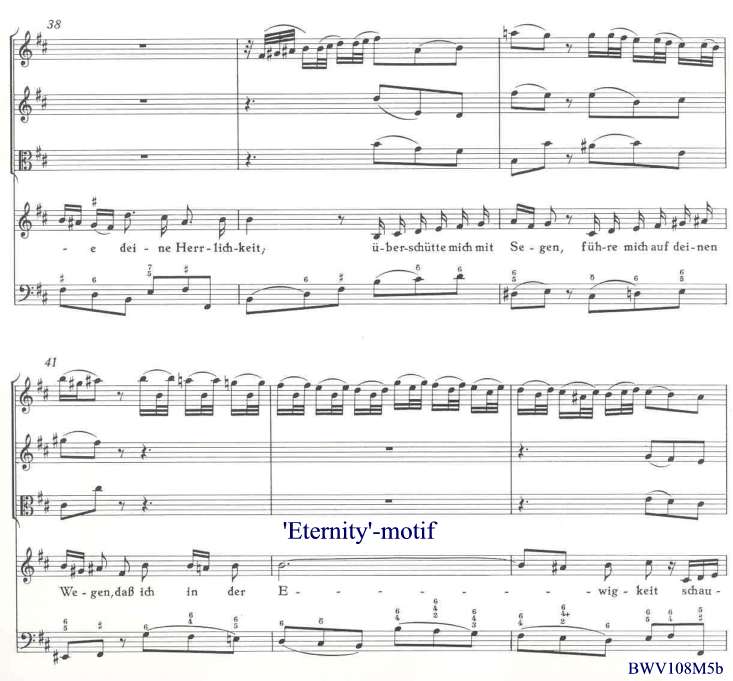
|
|
|
|
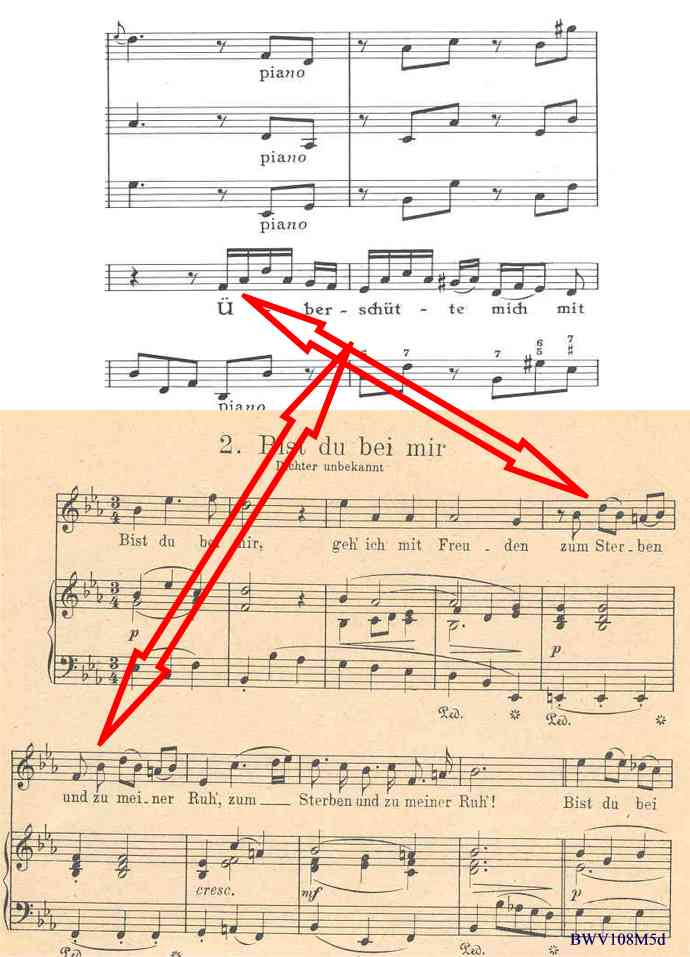
followed by the very beautiful musical phrase, "Überschütte mich" (pour over me,) that has a close similarity with the song, "Bist du bei mir" ("If you are with me.") |
|
|
| |
|
Mvt. 6 Chorale |
|
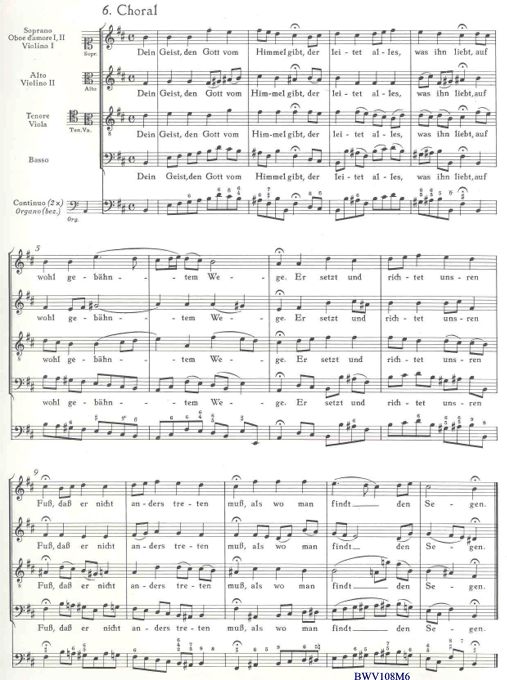
After all the discussion about a 'step"-motif and movement upwards into heaven, it should come as no surprise to see the type of inexorably moving vocal lines weaving their way throug the harmonization, in particular the bass part. |
|
|
| |
|
All snippets from NBA I/12
Contributed by Thomas Braatz (May 20, 2001) |

