|
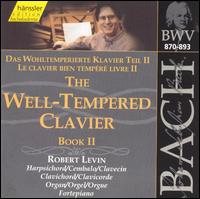
Well Tempered Clavier Book II BWV 870-893
Bach's Well Tempered Clavier Book II
Contents
Recordings
Part 1
Part 2
Part 3
Part 4
Part 5
Part 6
Part 7
Part 8
Part 9
Recordings
|
1 |
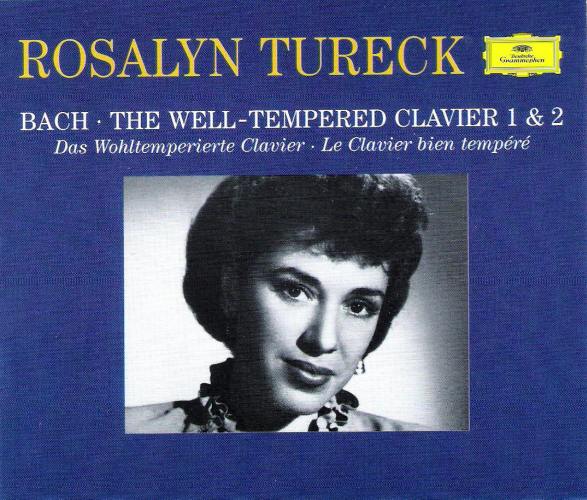
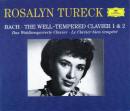
Bach: The Well-Tempered Clavier 1 & 2 [K-3] |
 |
|
WTC 2: 24 Preludes & Fugues BWV 870-893 [166:19] |
|
Rosalyn Tureck (Piano) |
|
Deutsche Grammophon (from American Decca) |
Dec 1952 - May 1953 |
4-CD / TT: 295:48 |
|
Recorded in New York, USA.
1st recording of WTC2 by R. Tureck.
Buy this album at: Amazon.com | Amazon.com |
 |
|
3 |
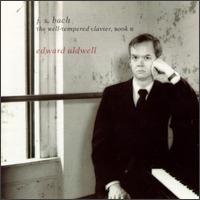
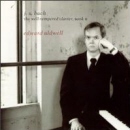
J.S. Bach: Well Tempered Clavier Book II [K-1] |
|
|
WTC 2: 24 Preludes & Fugues BWV 870-893 |
|
Edward Aldwell (Piano) |
|
Elektra Nonesuch |
Aug 1988 |
2-CD / TT: 146:42 |
|
Recorded at American Academy of Arts and Letters, New York, NY, USA.
Buy this album at: Amazon.com |
|
4 |
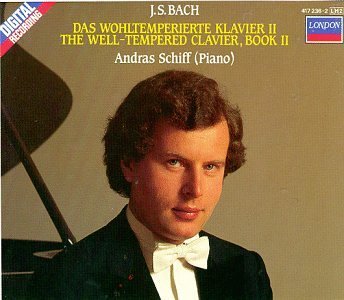
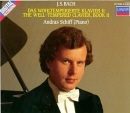
J.S. Bach: The Well Tempered Clavier Book II [K-8]
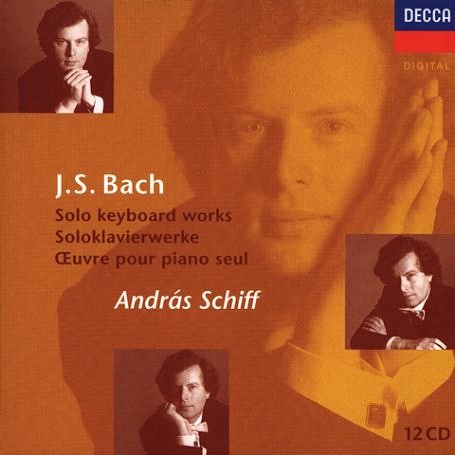
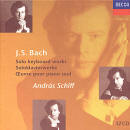
J.S. Bach: Solo Keyboard Works [Box Set] [B-1] |
|
|
WTC 2: 24 Preludes & Fugues BWV 870-893 [144:15] |
|
András Schiff (Piano) |
|
Decca |
Oct 1985 |
2-CD / TT: 144:15
12-CD / TT: 790:33 |
|
Recorded at Walthamstow Assembly Hall, London, England.
1st recording of WTC 2 BWV 870-893 by A. Schiff.
Buy this album at:
2-CD: Amazon.com
Box Set: Amazon.com |
|
6 |
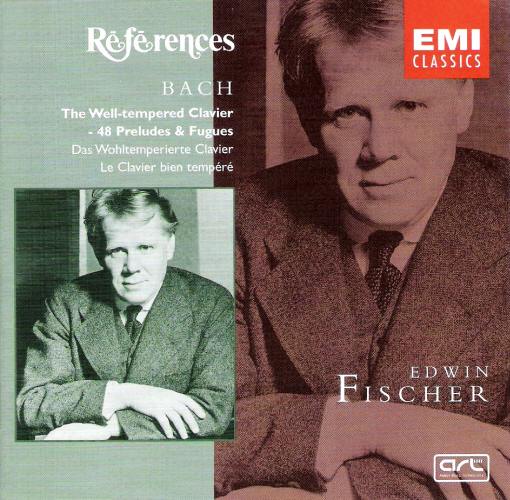
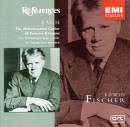
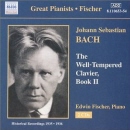
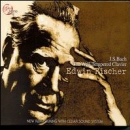
Bach: The Well-Tempered-Clavier - 48 Preludes & Fugues
[K-1]
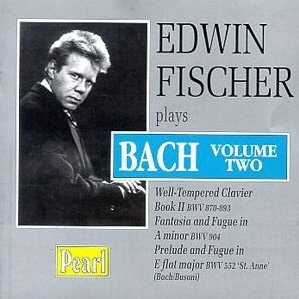
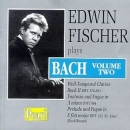
Edwin Fischer Plays Bach, Vol. 2 [K-3]
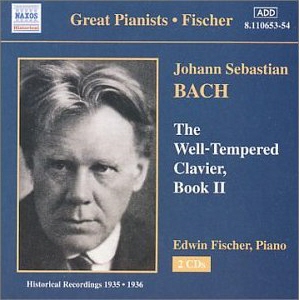
J.S. Bach: The Well-Tempered Clavier, Book II [K-5]
J.S. Bach: The Well-Tempered Clavier [K-6] |
|
|
WTC 2: 24 Preludes & Fugues BWV
870-893 [130:11] |
|
Edwin Fischer
(Piano) |
|
EMI Classics
Pearl
Naxos
Monopoly |
Feb, Apr 1935; Jun 1936 |
3-CD / TT: 237:47
2-CD / TT: 153:14
2-CD / TT: 130:01
4-CD / TT: 235:39 |
|
Recorded at Studio No. 3 Abbey Road, London, England.
Buy this album at: Amazon.com
[EMI] | Amazon.com
[Pearl] | Amazon.com
[Naxos] | Amazon.com
[Monopoly] |
|
|
|
7 |
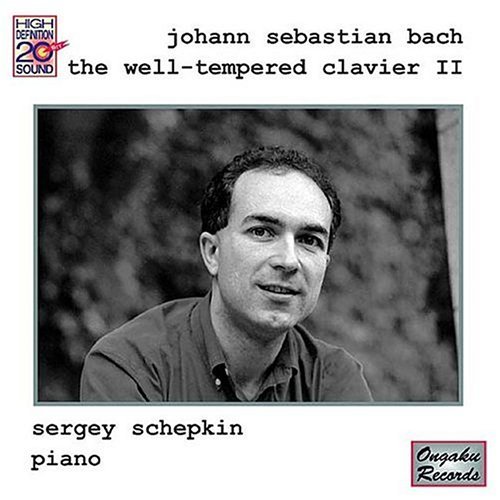
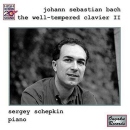
J.S. Bach: The Well-Tempered Clavier II [K-5] |
|
|
WTC 2: 24 Preludes & Fugues BWV 870-893 |
|
Sergey Schepkin (Piano) |
|
Ongaku Records |
Jan 12-13, 1998; Nov 24, 1999 |
2-CD / TT: 143:30 |
|
Recorded at Jordan Hall, New England Conservatory of Music, Boston, MA, USA.
Buy this album at: Amazon.com |
|
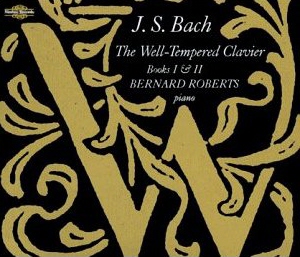
8 |
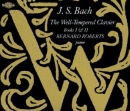
J.S. Bach: The Well-Tempered Clavier, Books I & II [K-1] |
|
|
WTC 2: 24 Preludes & Fugues BWV 870-893 [146:30] |
|
Bernard Roberts (Piano) |
|
Nimbus Records |
Jul-Aug 1998 |
4-CD / TT: 256:44 |
|
Recorded at Concert Hall of the Nimbus Foundation, Wyastone, England.
Buy this album at: Amazon.com |
|
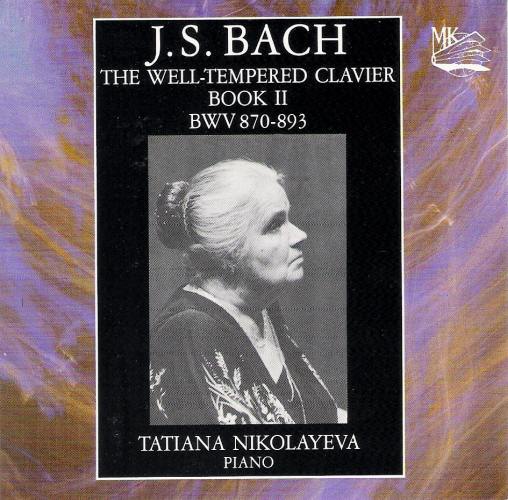
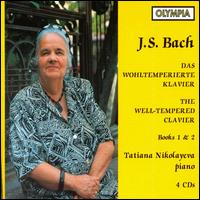
9 |
J.S. Bach: The Well Tempered Clavier Book II, BWV 870-893 [K-9]
J.S. Bach: The Well Tempered Clavier [Box Set] [B-2] |
 |
|
WTC 2: 24 Preludes & Fugues BWV 870-893 [154:05] |
|
Tatiana Nikolayeva (Piano) |
|
Mezhdunarodnaya Kniga
Olympia / RussianDVD / Aulos Classics |
May 1984 |
2-CD / TT: 154:05
4-CD / TT: 283:46 |
|
Recorded at Imaichi Public Hall, Japan.
2nd recording of WTC 2 by T. Nikolayeva.
Review: Nikolayeva’s WTC
Buy this album at: Amazon.com | Amazon.com [Box Set] | Amazon.com [Box Set] | Amazon.com [Box Set] |
|

|
|
11 |
J.S. Bach: The Well Tempered Clavier Book II (24 Preludes and Fugues) [K-1] |
|
|
WTC 2: 24 Preludes & Fugues BWV 870-893 |
|
Jenö Jandó (piano) |
|
Naxos |
Sep 1993 (1-12); Oct 1993 (13-24) |
2-CD / TT: 141:57 |
|
Recorded at the Unitarian Church, Budapest, Hungary.
Buy this album at: Amazon.com |
|
13 |
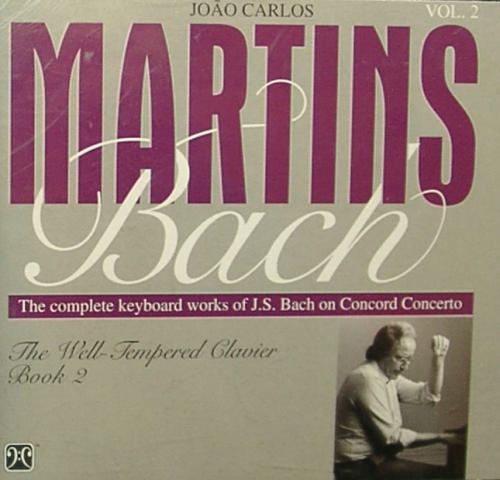
The Complete Keyboard Works of J.S. Bach Vol. 2: The Well-Tempered-Clavier Book 2 [K-2] |
 |
|
WTC 2: 24 Preludes & Fugues BWV 870-893 [] |
|
João Carlos Martins (Piano) |
|
Concord Concerto / Labor Records / Tomato Music |
1983 |
2-CD / TT: |
|
Recorded at Pomona College, Claremont, California, USA.
2nd recording of WTC 2 by J.C. Martins.
Buy this album at: Amazon.com [C] |
Part 1
Donald Satz wrote (May 26, 2000):
About a year ago I extensively reviewed the Ongaku release of the Well Tempered Clavier Book 1 performed by Sergey Schepkin. I was very impressed with the set and have been looking forward to his recording of Book II which has just been issued. Also, I recently picked up the newly reissued WTC set from Edwin Fischer on EMI.
With the acquisition of the above two sets, I thought I'd survey a few versions of the WTC Book II on piano:
[1] Tureck - DG 463305 (1953) with Book 1.
[2] Gould - Sony 42266 (1975) with Book 1.
[3] Aldwell- Nonesuch 79200 (1989).
[4] Schiff - Decca 417236 (1987).
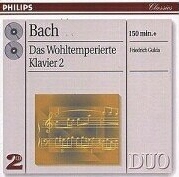
[5] Gulda - Philips 446548 (1973).
[6] Fischer- EMI 67214 (1930's) with Book 1.
[7] Schepkin-Ongaku 024-115 (1998/99).
[8] Roberts- Nimbus 5608/11 (1999) with Book 1.
[9] Nikolayeva - MK418043 (1984).
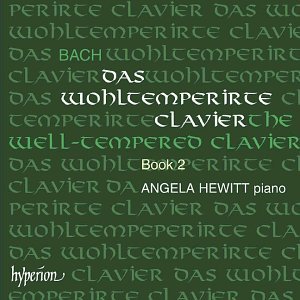
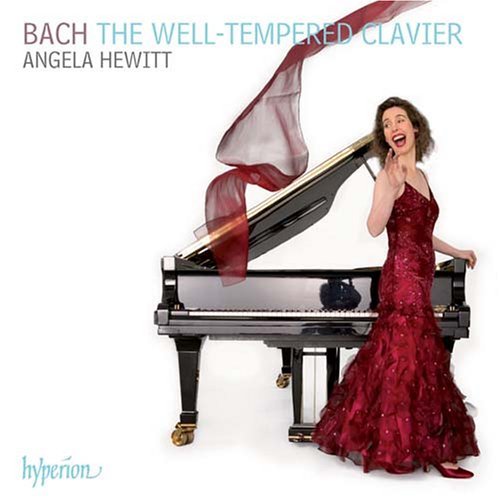
[10] Hewitt- Hyperion 67303/4 (1998/99).
[11] Jando - Naxos 8.550970/1 (1993).
For those not familiar, the WTC Book II consists of a series of 24 preludes and fugues in the different keys. Book 1 is arranged in a similar fashion. Prevalent opinion is that Book II is more complex than Book I, although each Book is certainly listener friendly. The WTC along with the Art of Fugue and St. Matthew Passion are my favorite Bach works.
Prelude & Fugue in C major - This is a lovely prelude displaying great joy, longing, and tension. It begins, unlike the C major from Book I, in an assertive/majestic manner and never lets you go until the end. The descending chromatic lines are particularly stunning. Only Fischer and Nikolayeva are not excellent; Fischer's sound tends to get lost in softer passages, and Nikolayeva is a little short on emotion. It is a shame about Fischer's sound, for his performance is the equal of any. Gulda is by far the fastest version, and it's infectious and emtionally charged. Hewitt, Jando, Gould, Schiff, and Roberts deliver great "mainstream" readings. Schepkin and Tureck tend to linger and luxuriate in the music to fine effect. Aldwell gives a "pondering" performance with the most changes in dynamics and pacing - it works wonderfully. This is a most auspicious start to the survey.
The Fugue in C major has great energy, speed, forward momentum, and an enormous tension which keeps building up and being released. Three versions are problematic. Nikolayeva has inconsistent pacing and gets stalled. Fischer's poor sound overwhelms a fine performance, and Roberts has a few smudged passages which are distracting. Hewitt, Aldwell, Tureck, Jando, and Schiff are very good. With Schepkin and Gulda we enter the outstanding category. Schepkin really flies through the fugue with perfect technical skills; it's perpetual motion and a great ride. Gulda takes the precision approach; the listener can examine every note and take in the dialogue. Gould's is the best interpretation as he's even more precise than Gulda and conveys more emotion; Gould and this fugue are a perfect match.
Prelude & Fugue in C minor - The prelude is a two-part invention in binary form which involves significant dialogue between the voices. The music is energetic and playful with passages of devilish mischief and urgency. The fugue is slower and more serious; it brings to my imagination a deathbed scene where the dying person has suffered greatly and loved ones are watching with dread. However, there are passages of acceptance and even anticipation by a person who has lost the desire to continue. The music ends with death and a sense of relief. Bach's use of inversion and augmentation is very effective.
Jando is at the bottom of the ladder. He moves quickly through both prelude and fugue, losing much sense of emotional involvement and missing the mark badly. Gould shows how to play the prelude very fast and still encompass emotional weight. Unfortunately, he employs a staccato approach to the fugue which, for me, trivializes the music. The fugue is definitely not trivialized in Nikolayeva's version which packs a mighty emotional wallop. Her prelude is almost as good - very playful, devilish, and urgent. Schiff is close to Nikolayeva's level; he is more soft-toned and tender, and it works well. Roberts, although very enjoyable, is a little hum-drum in the fugue. Fischer is superb in both prelude and fugue, but his sound definitely a hindrance. It was particularly fierce during the second half of the fugue - just something to live with. Tureck's also excellent with sound much better than Fischer's. Schepkin is slightly rushed in the prelude but his fugue is outstanding. Gulda is slow paced in both pieces and stresses the counterpoint beautifully; emtional content is high. Hewitt and Aldwell deliver delightful preludes and beautiful fugues. Overall, the C minor music is best served by Gulda, Nikolayeva, Hewitt, and Aldwell.
Prelude & Fugue in C sharp - The prelude begins with a beautiful adagio followed by a powerful forward-momentum, yet poetic allegro. The music is quite difficult to perform well in that the adagio and allegro call for different aesthetics. Seven versions have one or more significant problems. Schiff and Nikolayeva are good in the allegro but have a "sonic sludge" sound in the adagio; for good measure, Nikolayeva is not inspired in the allegro. Jando delivers an excellent adagio followed up by a run-through of the allegro. Fischer is slow and very moving in the adagio but plays the allegro as "pretty" music; his sound in the adagio is loaded with waves of static. My view of Fischer's reading also applies to Schepkin except for the latter's fine recorded sound. Hewitt just tends to leave me cold. Roberts is great in the allegro but I had the feeling that he recognizes no beauty to the adagio. The four superb versions are Gulda, Gould, Tureck, and Aldwell. Gulda's is a very straight-forward reading of great clarity and the right emotional content at the right time. The allegro is made to order for Gould, and he uses a staccato in the adagiowhich, although I initially thought robbed the music of its beauty, gives it a blustery swagger which I now can't resist. Tureck provides a very beautiful, slow, and powerful adagio; her allegro is very good. Aldwell has the slowest adagio and it maintains great interest through his pensive and emotionally charged playing; the allegro is also excellent.
The three-voice Fugue in C sharp is both technically and emotionally rich. The second voice overlaps the first voice (stretto), the third comes in already inverted, and there's also augmentation and diminution to explore. Emotionally, there's a strong surface playfulness backed up with, in some versions, a great sense of urgency and tension. All the versions are highly enjoyable except for Hewitt; her pacing, accents, and banging away on the keyboard are not to my liking. Three versions are outstanding. Aldwell delivers the strongest urgency without key banging, and Fischer's rendition has tension abounding from the start; he had me on the edge of my seat (and I was standing up). Gould is something else; he's the slowest by far with a timing of about 3' 30", more than a minute slower than any other version. He is so cocky, precise, and musical. Gould is just mechanical? Listen to this fugue and you're bound to alter your opinion.
At this point, it's particularly hard to say where Fischer might stand at the end of the survey. The sound quality varies greatly from track to track, and Fischer has some ways about him which are at variance with today's standards. But there's never any doubt that he is inside Bach with a thinking person's conception.
Prelude & Fugue in C sharp minor - Hewitt refers to this prelude as melancholy music, and she is so right. All the interpretations are worthwhile and engaging. Three are excellent. Tureck takes over 6 minutes while all the others are under 5. Although slow, her pulse is on the music and interest never wanes. Schepkin is quick in timing, but it never feels that way. He has the full measure of expected emotions. Hewitt's pacing is relaxed and smooth; her version is the most melancholy. Fischer is outstanding. He doesn't neglect the melancholy, but he adds a strongly morose atmosphere with a sinister tinge. His sound holds up pretty well.
It's time to turn up the volume to experience the cataclysmic upheavals of the C sharp minor Fugue. Six versions don't quite convey a cataclysm. Schiff is much too civilized, Schepkin is urbane, Aldwell exhibits mannerisms, Fisher isn't good enough to break through some poor sound, and Nikolayeva comes to an abrupt and jarring halt about half-way through the fugue that killed it for me. Jando's problem is one which appears prevalent for him; he plays well and is on the right conceptual track, but his technique and artistry don't quite reach the heights displayed by other versions. Tureck is excellent but her sound is distracting; during one softer passage, the sound almost drops off. Hewitt delivers a cataclysm that builds up dramatically. Robert's cataclysm is constant and powerful. Both Gulda and Gould are very fast and precise; they represent the "hurtling through time and space" versions. Although precise, Gulda's reading also conveys a chaotic quality. Ultimately, Gould's version is the best. His is more detailed than Gulda's, and he displays the highest level of cataclysm and just the right degree of poetry for this blistering performance.
Although not holding up too well to the other versions, Roberts is displaying more "feeling" than I originally thought and his sound is very good. Taken by themselves, the performances are certainly rewarding and enjoyable.
Continue on Part 2
Well Tempered Clavier Book I BWV 846-869 : Part 1 | Part 2 | Part 3 | Part 4 | Part 5 | Part 6 | WTC I - Edwin Fischer | WTC I - Misczyslaw Horszowski | WTC I - Christiane Jaccottet | WTC I - Ralph Kirkpatrick | WTC I - Ton Koopman | WTC I - Wanda Landowska | WTC I - Robert Levin | WTC I - Sviatoslav Richter | WTC I - Sergei Schepkin
Well Tempered Clavier Book II BWV 870-893: Part 1 | Part 2 | Part 3 | Part 4 | Part 5 | Part 6 | Part 7 | Part 8 | Part 9 | WTC II - Gary Cooper | WTC II - Friedrich Gulda | WTC II - Angela Hewitt | WTC II - Ralph Kirkpatrick
Well Tempered Clavier Books I&II BWV 846-893: WTC I&II - Bob van Asperen, Scott Ross & Glenn Wilson | WTC I&II - Ottavio Dantone | WTC I&II Samuel Feinberg | WTC II&II - Tatiana Nikolayeva | WTC I&II - Zuzana Ruzickova
|