|
|
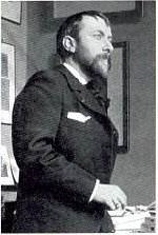
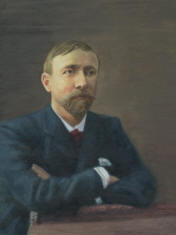
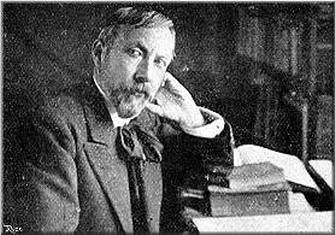
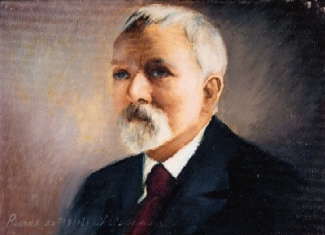
Gabriel Pierné (Composer, Arranger) |
|
Born: August 16, 1863 - Metz, France
Died: July 17, 1937 - Ploujean, France |
|
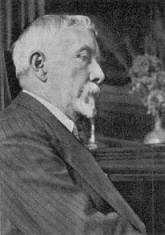
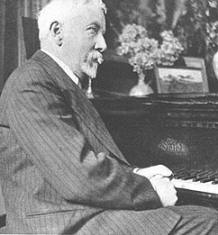
The noted French composer, conductor and organist, (Henri-Constant-) Gabriel Pierné, has been called the most complete French musician of the late Romantic/early 20th century era. In his own music Pierné blended a seriousness of purpose (acquired in part through his studies with César Franck) with a lighter, more popular flavor reminiscent of Jules Massenet (with whom Pierné also studied); his dedication to the music of his contemporary French composers earned him a reputation as a conductor of deep integrity. |
|
Life |
|
Gabriel Pierné displayed great musical promise as a child, and from 1871 to 1882 he studied at the Paris Conservatoire, where his teachers were Marmontel (piano), César Franck (organ), and Massenet (composition). At age 11 Pierné earned a medal for his solfège skills, and he later went on to win the first medal for solfège (1874), piano (1879), counterpoint and fugue (1881), and organ (1882). In 1882 he was awarded the Grand Prix de Rome with his cantata Edith.
In 1890 Gabriel Pierné succeeded his teacher, César Franck, as organist at St. Clotilde cathedral, a distinct honour for a young man of 27. He held this post until 1898 (succeeded by another distinguished César Franck pupil, Charles Tournemire), abandoned his career as an organist, thereafter concentrating on composition and conducting. In 1903 made his debut as assistant conductor of the Concerts Colonne, of which he served as principal conductor (replacing E. Colonne at his death) from 1910 to 1934, devoting a great deal of rehearsal time to the preparation of new works. In addition to his activities on the podium, he was a member of the directing committee of studies at the Paris Conservatoire, and composed for the Ballet Russes (three successful ballets produced between 1923 and 1934). In 1925 he was elected to the Académie des Beaux Arts and later was made a Chevalier of the Légion d'honneur. The Place Gabriel Pierné in Paris is named for him. |
|
Music |
|
Gabriel Pierné's output as a composer, while by no means as vast as some of his Parisian colleagues (one thinks in particular of Camille Saint-Saëns), includes entries in most of the standard genres (8 operas, oratorios, instrumental and orchestral music, and songs). In typically French style, he avoided symphonic form in favour of orchestral poems and character pieces. His works are all marked by his clear technique and pleasing synthesis of Franckian and Debussian traits. His operettas have sensuous charm (e.g. Sophie Arnould, 1927), his large-scale works (e.g. the 1897 oratorio L'an mil and the opera Vendée from the same year), showcase a solid grasp of musical architecture, and the smaller chamber works (sonatas for both violin and cello and a String Quintet, among other pieces), are more indicative of his exceptional facility. His most popular works are the oratorio La Croisade des Enfants (1905), the piano pieces Marche des petits soldats de plomb and Entrance of the Little Faun, and Introduction et variations sur une ronde populaire, for saxophone quartet. |
|
Works |
|
Dramatic: Operas:
La Coupe enchantée (Royan, Aug. 24, 1895; revised version, Paris, December 26, 1905)
Vendée (Lyons, March 11, 1897)
La Fille de Tabarin (Paris, Feb. 20, 1901)
On ne badine pas avec l'amour (Paris, May 30, 1910)
Sophie Arnould, lyric comedy, based on episodes from the life of the famous singer (Paris, February 21, 1927)
Ballets & Pantomimes:
Le Collier de saphirs (1891)
Les Joyeuses Commères de Paris (1892)
Bouton d'or (1893)
Le Docteur Blanc (1893)
Salomé (1895)
Cydalise et le chèvre-pied (1919; Paris, January 15, 1923; as an orchestral suite, 1926)
Impressions de Music-Hall "ballet a l'Americaine" (Paris, April 6, 1927)
Giration (1934)
Fragonard (1934)
Images, "divertissement sur un thème pastoral" (Paris, June 19, 1935)
Orchestral:
Suite de concert (1883)
Première suite d'orchestre (1883)
Ouverture symphonique (1885)
Piano Concerto (1887)
Marche solonnelle (1889)
Pantomime (1889)
Scherzo-Caprice for Piano and Orchestra (1890)
Poème symphonique for Piano and Orchestra (1901)
Ballet de cour (1901)
Paysages franciscains (1920)
Gulliver au pays de Lilliput (Paris, June 23, 1937)
Chamber:
Pastorale variée dans le style ancien for Wind Instruments (also for Piano)
Berceuse for Violin and Piano
Caprice for Cello and Piano
Canzonetta for Clarinet and Piano
Solo de concert for Bassoon and Piano
Variations fibres et Finale for Flute, Violin, Viola, Cello, and Harp
PIANO:
15 pièces (1883)
Etude de concert
Album pour mes petits amis (containing the famous Marche des petits soldats de plomb)
Humoresque
Rêverie
Ariette dans le style ancien
Pastorale variée
Sérénade à Colombine
Sérénade venitienne
Barcarolle for 2 Pianos
folk song arrangements
Vocal: Oratorios:
La Croisade des enfants for Chorus of Children and Adults (Paris, January 18, 1905)
Les Enfants à Bethléem for Soloists, Children's Chorus, and Orchestra (Amsterdam, April 13, 1907)
Les Fioretti de St. François d'Assise (1912)
Song Cycles:
Contes (1897)
3 Adaptations musicales (1902)
3 mélodies (1904)
38 other songs
folk song arrangements |
|
|
|
Source: Answers.com Website (from All Music Guide, Author: Blair Johnston; Columbia Encyclopedia, Oxford Music Encyclopedia); Baker’s Biographical Dictionary of 20th Century Classical Musicians (1997); Grove’s Dictionary of Music and Musicians (1952 Edition); Wikipedia Website
Contributed by Aryeh Oron (July 2007) |
|
Gabriel Pierné : Short Biography | Piano Transcriptions: Works | Recordings |
|
Links to other Sites |
|
Pierné, Henri Constant Gabriel (Answers.com)
Gabriel Pierne Biography (Naxos)
Gabriel Pierné (1863-1937) (Karadar)
"Of Church and circus": biography (Find Articles)
(Henri-Constant) Gabriel Pierné (Classical Composers Database) |
Gabriel Pierné (Wikipedia) [English]
Gabriel Pierné (Wikipédia) [French]
Pierne, Henri Constant Gabriel (The Columbia Encyclopedia)
Henri Constant Gabriel Pierné (Encyclopedia.com) |
|
Bibliography |
|
G. Masson : Gabriel Pierné, musicien lorrain (Nancy and Metz, 1987) |
|
|

