|
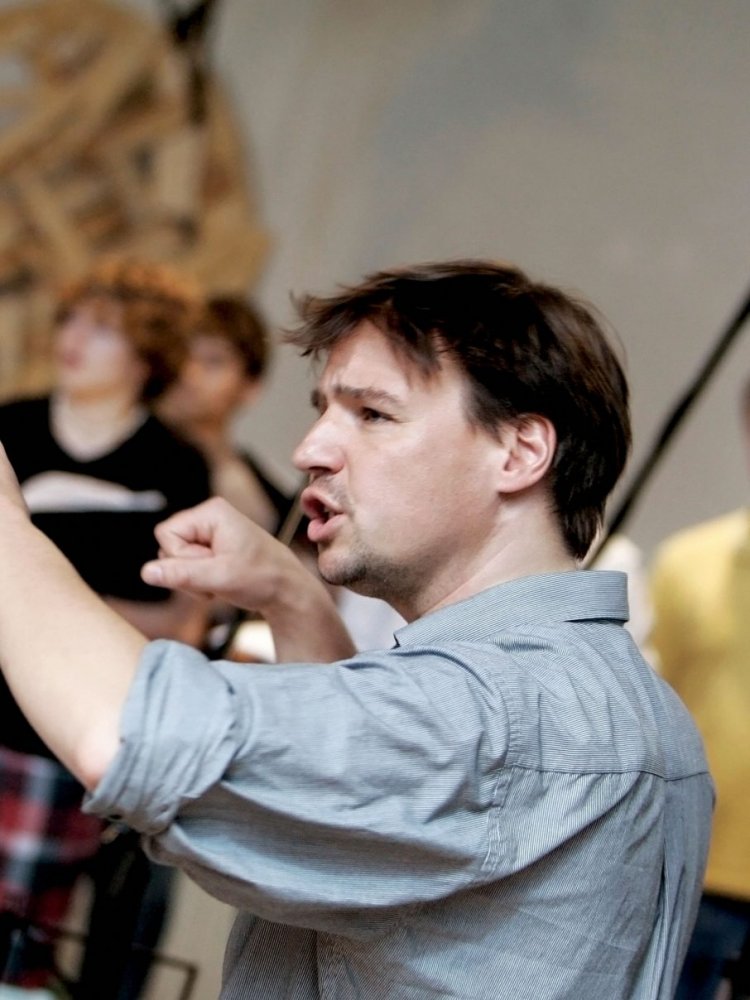
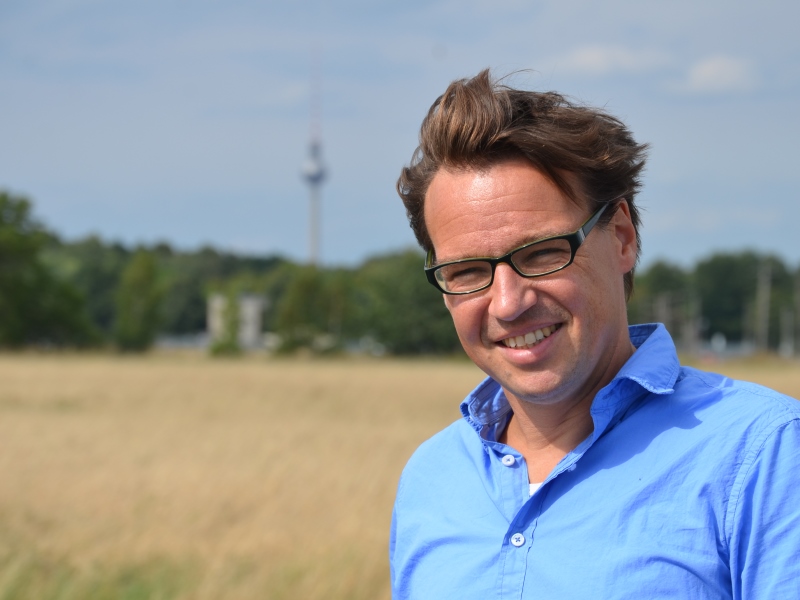
The German choral conductor, conductor and musiic poedagogue, Kai-Uwe Jirka, graduated from high school in Rotenburg (Wümme), Lower Saxony in 1987. He completed his community service at a parish in Springe, where he founded the children's and youth choir Quilisma at St.-Petrus-Kirche in 1988, which became one of the most successful children's and youth choirs in Germany. His concert and music theater projects have received recognition far beyond the region. Together with the Kinderchor Dresden, he premiered the opera Krabat in 1993, including at the Dresden Kreuzkirche. Concert tours to England, Hungary, and the Czech Republic followed.
At the same time, Kai-Uwe Jirka studied orchestral conducting, German studies, and church music at the Hochschule für Musik und Theater Hannover. His influential teachers included Martin Brauß, Lutz Köhler (conducting), Peter Becker (music theory), and the Brazilian pianist Roberto Szidon.
From 1995 to 1998, Kai-Uwe Jirka was director of the Schaumburger Märchensänger in Obernkirchen. In 1999, he was appointed by Hans-Peter Lehmann to the Niedersächsische Staatsoper, where he initially worked as a répétiteur and chorus master, and from 2001 (under the artistic direction of Albrecht Puhlmann) also as Kapellmeister in repertoire performances (opera and operetta). In 2001, he he made there his debut as an opera conductor. In 2002, he was appointed Professor of Choral Conducting at the Universität der Künste Berlin. In the same year, the ensemble received the European Choral Prize. His academic commitments include conducting the Staats- und Domchor Berlin and teaching at the Institut für Kirchenmusik Berlin in the tradition of Carl Friedrich Zelter, Felix Mendelssohn, and Hugo Distler. Since 2004, the boys' voices of the Staats- und Domchor Berlin have been engaged for numerous recordings and concerts, including at the Berliner Philharmonie, Konzerthaus Berlin and the Opernhäusern der Stadt. Kai-Uwe Jirka has undertaken choir rehearsals for conductors such as Ton Koopman, René Jacobs, Claudio Abbado, Sir Simon Rattle, Joana Mallwitz, Kent Nagano, and Teodor Currentzis. He has collaborated on his own projects with ensembles such as the RIAS-Kammerchor, Rundfunkchor Berlin, Vocalconsort Berlin, and Hilliard Ensemble, as well as with orchestras such as the Niedersächsisches Staatsorchester Hannover and the Kammerakademie Potsdam. In 2006, he took over the artistic direction of the venerable Berliner Singakademie, together with Friederike Stahmer and Christian Filips.
A focus of his work is the rediscovery of forgotten oratorio works of the 19th century. Kai-Uwe Jirka has performed, among others, Mose by Adolph Bernhard Marx (2009) and Miltons Morgengesang by Johann Friedrich Reichardt (2008). Der Tagesspiegel wrote on March 28, 2010: "It is long overdue to say something about the work of Kai-Uwe Jirka. There has never been a more tireless music excavator in Berlin. Almost every month, the 42-year-old comes up with interesting discoveries." His modern premiere of Adalbert von Goldschmidt's oratorio Die sieben Todsünden, which Jirka performed for the first time since 1883 at the Berliner Volksbühne, attracted considerable attention in 2024.
An intensive study of historical performance practice, the repertoire of the Bach family, the Baroque, and Berlin Classicism emerged from the musical exploration of the archive of the Berliner Singakademie, which was believed lost after World War II and restituted to the Berliner Singakademie by the Ukrainian government in 2001. Since 2006, Kai-Uwe Jirka, together with the Lautten Compagney Berlin, has given modern premieres of numerous unknown works from the archive, including compositions by Amalie von Preußen, Carl Philipp Emanuel Bach and Wilhelm Friedemann Bach, Johann Friedrich Agricola, Carl Heinrich Graun, and Johann Theile.
Kai-Uwe Jirka has also made a name for himself as a conductor of world premieres in the field of contemporary music. He has enjoyed a long-standing collaboration with the composer Katia Tchemberdji. He has premiered works commissioned by him, including works by Jörg Birkenkötter, Luke Bedford, and Isabel Mundry. He is particularly interested in the compositional work of Christfried Schmidt, whose Markus-Passion, composed in 1974, he premiered in Berlin's Gethsemanekirche in April 2019, 45 years after its composition. The Frankfurter Allgemeine Zeitung (FAZ) called it a "late triumph" and a "piece of unyielding music."
His Awards include: Lower Saxony Young Talent and Artist Scholarship; 2004: Grammy Award nomination for Best Choral Performance for the recording of Leonard Bernstein's Mass, conducted by Kent Nagano (2004); Deutscher Chorwettbewerb Dortmund, 2nd Prize + Special Prize for Folk Song (Men's Choir of the Staats- und Domchor Berlin) (2010); Grammy Award nomination for Best Choral Performance (2015). |