|
Suites for Cello Solo BWV 1007-1012
Bach’s Suites for Solo Cello, Part 1
Contents
Recordings
Part 1
Part 2
Part 3
Part 4
Part 5
Part 6
Recordings
|
1 |
Suites for Solo Cello |
|
|
Suites for Cello Solo BWV 1007-1012 |
|
Boris Pergamenschikow (cello) |
|
Hänssler |
1998 |
2-CD / TT: 2:09:00 |
|
2 |
Six Unaccompanied Cello Suites |
|
|
Suites for Cello Solo BWV 1007-1012 |
|
Yo-Yo Ma (cello) |
|
CBS/Sony |
1983 |
2-CD / TT: |
|
1st recording of the Cello Suites by Yo Yo Ma |
|
3 |
The Cello Suites |
|
|
Suites for Cello Solo BWV 1007-1012 |
|
Yo-Yo Ma (cello) |
|
Sony |
1997 |
2-CD / TT: |
|
2nd recording of the Cello Suites by Yo Yo Ma |
|
4 |
Suites for Violoncello Solo BWV 1007-1012 |
|
|
Suites for Cello Solo BWV 1007-1012 |
|
Anner Byslma (cello |
|
Sony |
1992 |
2-CD / TT: |
|
5 |
Cello Suites |
|
|
Suites for Cello Solo BWV 1007-1012 |
|
Ralph Kirshbaum (cello) |
|
Virgin |
1994 |
2-CD / TT: 2:20:45 |
|
6 |
Six Suites for Solo Violoncello |
|
|
Suites for Cello Solo BWV 1007-1012 |
|
Roel Dieltiens (cello) |
|
Accent |
1991 |
2-CD / TT: |
|
7 |
Suites for Cello Solo |
|
|
Suites for Cello Solo BWV 1007-1012 |
|
Peter Bruns (cello) |
|
Opus 111 |
1997 |
2-CD TT: 2:05:35 |
|
8 |
Cello Suites |
|
|
Suites for Cello Solo BWV 1007-1012 |
|
Paolo Beschi (cello) |
|
Winter & Winter |
1998 |
2-CD / TT: 2:09:01 |
|
9 |
6 Cello Suites |
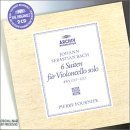
|
|
Suites for Cello Solo BWV 1007-1012 |
|
Pierre Fournier (cello) |
|
Archiv |
1961 |
2-CD / TT: 2:18:40 |
|
10 |
6 Suites for per violoncello solo |
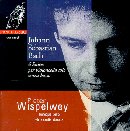
|
|
Suites for Cello Solo BWV 1007-1012 |
|
Pieter Wispelwey (cello) |
|
Channel Classics |
1998 |
2-CD / TT: |
|
2nd recording of the Cello Suites by P. P. Wispelwey |
|
11 |
Cello Suites |
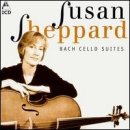
|
|
Suites for Cello Solo BWV 1007-1012 |
|
Susan Sheppard (cello) |
|
Metronome |
1999 |
2-CD / TT: 2:14:01 |
|
12 |
Cello Suites |
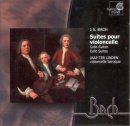
|
|
Suites for Cello Solo BWV 1007-1012 |
|
Jaap ter Linden (cello) |
|
Harmonia Mundi |
Oct 1006 |
2-CD / TT: 2:25:33 |
|
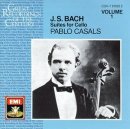
13 |
Cello Suites Nos. 1-6 |
|
|
Suites for Cello Solo BWV 1007-1012 |
|
Pablo Casals (cello) |
|
EMI |
1936-1939 |
2-CD / TT: 2:13:17 |
|
14 |
Cello Suites |
|
|
Suites for Cello Solo BWV 1007-1012 |
|
Barbara Westphal (viola) |
|
Bridge |
1999 |
2-CD / TT:1:59:10 |
|
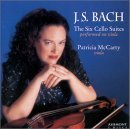
15 |
6 Cello Suites performed on viola |
|
|
Suites for Cello Solo BWV 1007-1012 |
|
Patricia McCarty (viola) |
|
Ashmont |
2000 |
2-CD / TT: 2:15:06 |
|
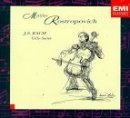
16 |
Cello Suites Nos. 1-6 |
|
|
Suites for Cello Solo BWV 1007-1012 |
|
Mstislav Rostropovich (cello) |
|
EMI |
1995 |
2-CD / TT: |
|
17 |
6 Suites for Cello |
|
|
Suites for Cello Solo BWV 1007-1012 |
|
Mischa Maisky (cello) |
|
Deutsche Grammophon |
1999 |
2-CD / TT: 2:34:35 |
|
18 |
Cello Suites |
|
|
Suites for Cello Solo BWV 1007-1012 |
|
Guido Schiefen (cello) |
|
Arte Nova |
1996 |
CD / TT: |
Part 1
Donald Satz wrote (October 27, 2000):
Fournier's set for Archiv of Bach's Suites for Cello was my first bona-fide journey into one of Bach's greatest musical creations. I know a few Bach fans who don't care much for the Cello Suites; they consider them too dark, austere, and even depressing. My view is that further exploration of these six suites can help a listener to crack through that superficial veneer and discover the wide breadth of themes conveyed in the works. After all, much of it is in the form of music for dancing.
The cello is a great instrument. Its deep, strong, mournful, and rich tone is always a welcome respite from the violin. Of course, the Suites for Cello have been performed on other instruments as well, most frequently on the viola. In deciding which recorded sets to review and compare, I've tried to strike a balance between period and modern instruments for a person who has been listening most in recent years to period instrument performances. Viola recordings are also included. My intent is to say as little as needed concerning baroque vs. modern cello.
I go into this survey just wanting to listen to great performances that enlighten, impact, and give me much pleasure. The recordings for review are:
[1]. Boris Pergamenschikow - Hänssler 92120 (1998).
[2]. Yo-Yo Ma I - CBS/Sony 37867 (1983).
[3]. Yo-Yo Ma II - Sony 63203 (1997).
[4]. Anner Byslma - Sony 48047 (1992).
[5] Ralph Kirshbaum - Virgin 61609 (1994).
[6] Roel Dieltiens - Accent 9171 (1991).
[7] Peter Bruns - Opus 111 30176 (1997).
[8] Paolo Beschi - Winter & Winter 910028 (1998).
[9] Pierre Fournier - Archiv 449711 (1961).
[10] Pieter Wispelwey - Channel Classics 12298 (1998).
[11] Susan Sheppard - Metronome 1034 (1999).
[12] Jaap ter Linden - Harmonia Mundi 907216 (1997).
[13] Pablo Casals - EMI 66215 (1936/39).
[14] Barbara Westphal - Bridge 9094 (1999) Viola.
[15] Patricia McCarty - Ashmont 6100 (2000) Viola.
[16] M. Rostropovich - EMI 55363 (1995).
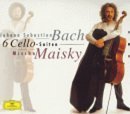
[17] Mischa Maisky - DG 463314 (1999).
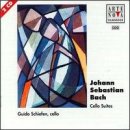
[18] Guido Schiefen - Arte Nova 39045 (1996).
Boris Pergamenschikow is likely not a familiar name, but his modern instrument set received some fine reviews when issued. The other modern instrument accounts are from Casals, Rostropovich, Maisky, Yo-Yo Ma, Schiefen, Kirshbaum, and Fournier. Patricia McCarty's set is on Ashmont, a Massachusetts company which I had not heard of until recently; however, the disc has been listed on various sales web sites. I am familiar with all the above sets except for the two on viola and am looking forward to listening to the contrasts between the viola and cello.
Concerning Guido Schiefen, he's the sentimental favorite. I love his first name, hardly anyone has heard of him, and the cover photograph clearly reveals that he needs all the help he can get. Go Guido!
The Suites for Cello were likely written around the period of the English Suites. They have the same sequence of movements: Prelude, Allemande, Courante, Sarabande, Galanteries (Minuet, Bourree, or Gavotte), and Gigue.
Cello Suite No. 1 in G major, BWV 1007 - If you find much austerity in this Suite, you're in for troubles later on. This is probably the most serene and relaxing suite of the set. The prelude reminds me a lot of the C major prelude from Bach's WTC Book 1; I think of both providing the building blocks of a musical piece with energy being absorbed and stockpiled and then finally released. Technically, the music is based on semi-quavers and reaches its climax through a chromatic ascent stretching 1 1/2 scales. That can be quite exciting, and most versions do try to release a great deal of energy. However, a few of the versions, mostly in the three minute range, don't place high priority on the build-up or release of energy; they stress intimacy and have varying degrees of mystery and mournfulness on display. I find this approach equally rewarding.
Three versions don't make the first cut: Pergamenschikow, Bruns, and Westphal. Bruns is quick and sounds pesty; I don't like his hectic phrasing and he misses most of the nuances. Westphal, on viola, sounds like a buzzing bee; it's not an attractive sound and she even gives me the sense of scales being played which is a killer in this music. Pergamenschikow is aggressive from the start and does not let up. Instead of building up pressure from point zero, the beginning sounds like it should be the middle of the prelude; there's simply not enough contrast in this relentless reading.
The following versions are fine listening experiences but not particularly distinctive: Maisky, Rostropovich, Wispelwey, Bylsma, and Schiefen. Maisky has a nice swaying pace but is too demure at times and overly romantic at others, especially toward the conclusion. Rostropovich plays too softly much of the time, although his energy build-up is admirable. Wispelwey is quite poetic, but his reading has a lethargic quality. Bylsma provides a stately reading that straddles the fence between intimacy and excitement, not hitting either one strongly. Schiefen has nice pacing but gets overly emotional toward the conclusion.
Dieltiens, Casals, Fournier, and Kirshbaum are excellent versions. Each has great pacing (Deiltens very fast) and is highly expressive. Kirshbaum provides a playful quality which is refreshing. Fournier and Casals are aristocratic with fine nuancing. Dieltie's technical abilities are very impressive, but his climax is somewhat ineffectual.
Now come my six favorite versions. Patricia McCarty gives the most beautiful performance; she and her viola sound fantastic. Also, she is fully expressive with an excellent building-up and release of energy. Jaap ter Linden provides a truely intimate and slow reading with mystery throughout; it's irresistable to me. Susan Sheppard delivers a thoroughly conversational performance; listening to this version is a major treat as if I was witnessing a family discussion at dinner time. Any number of images are elicited by her interpretation. If you want an exciting performance, Paolo Beschi is the man for the job. His reading reminds me of a great Glenn Gould performance - very fast, great forward momentum, fine tension, and an ability at high speed to cover all levels of emotion. Both Yo-Yo Ma readings are outstanding. Ma I, the older version, is a classically chiseled performance with the best climax of the 18 versions. Ma II is highly expressive and idiomatic; it's the perfect interpretation for a listener who prefers a relatively romantic performance which doesn't go over the top.
The Allemande is an elegant and lovely piece which has a mournful and melancholy quality interspersed with some uplifting/playful passages. I consider it important that the positive elements of the music are not subservient to the melancholy element. In effect, I'm most looking for versions which are lively and vibrant. Guido Schiefen and Patricia McCarty have significant problems. Schiefen is again too romantic and also monotonous with his bass chords. McCarty, on viola, is at a disadvantage with mournful music and seems to glide on the surface with insufficient expression.
The following versions are rewarding but a little too somber: Pergamenschikow, Dieltiens, Fournier, Wispelwey, Sheppard, and Jaap ter Linden. These performances tend to be on the slow side and earth-bound, emphasizing the mournful characteristics at the expense of the uplifting qualities. Each performance is very good for what is projected but ultimately lacking in the conveying of the satisfactions of life.
Ten versions do a fine or better job at balancing the sad and uplifiting musical themes. Rostropovich, Westphal, Bruns, Kirshbaum, and Ma I and II provide excellent readings. Rostropovich, as in the Prelude, is very quick with an infectious pacing. I'm very glad to see Westphal eschew her buzzing from the Prelude and get down to some serious and uplifting music-making.
Maisky, Casals, Bylsma, and Beschi are superb. Maisky's is a glorious performance; it veers toward the romantic end but always maintains good proportion and outstanding expressiveness. Casals seems to have the music in his blood; his rather subtle interpretation is the deepest of all the surveyed versions - there's no room for splashy display from Casals, only music making from the heart. Bylsma's reading is truely sublime and probably the most uplifting of all versions. Beschi was fast as hell in the Prelude; for the Allemande, he applies the brakes and still delivers the most exciting and visceral reading; his baroque cello sings out more beautifully and stunningly than in any other performance.
Beschi deserves a few comments. He appears to be Winter & Winter's house baroque cello performer. Reviews from periodicals of his recordings are not always complimentary; he has been tagged as a wiry sounding cello player with a host of eccentricities. I have not shared that assessment which I think comes most from reviewers who simply do not really like the basic sound of a period stringed instrument. I find Beschi highy musical and innovative, a person who completely analyzes each musical strand and comes up with his own conception. I think that any Bach enthusiast who likes baroque cello would appreciate Mr. Beschi's artistry.
Next is an Italian-style Courante which is vibrant and playful. Casals provides a relatively somber performance which I feel is contrary to the lively nature of the piece. A very heavy performance is given by Rostropovich which doesn't work any better than the Casals issue. Other versions toward the bottom include Bylsma who is slow and somewhat lifeless, Bruns who clips too many notes and loses some musicality, and Beschi who takes the approach of Bruns. Maisky's performance rates some commenting; he takes great liberty with tempo and dynamics and ends up sounding to me like romaticized schizophrenia.
Nine of the remaining versions are a step up, but they tend not to be emphatically played performances, and I really like this Courante to ring out its pleasures. Wetphal, Sheppard, and particularly Fournier are highly emphatic while still retaining a fine degree of playfulness. Of the three, my favorite is Fournier who is also aristocratic and elegant.
The Sarabande is a lovely and introspective piece with an *aching* type of tenderness and longing. I started with Casals since I remember thinking highly of his interpretation. Now I know why; the degree of longing in his reading is amazing. The "swells" he creates just have to be heard, and his performance is as strongly projected as I could want. Brun's reading is aristocratic but not close to the core of the music as Casals; however, it is a very fine performance. Fournier is at a lower level than Bruns; his energy level is more relaxed and I feel that the music suffers as a result. The same comments apply to Bylsma, Dieltiens, Wispelwey, and Rostropovich.
Beschi, less aristocratic than Bruns but more expressive, gives as fine a performance. Ma I is even better with high expressiveness and strong projection which never ventures into an over abundance of romanticism. Ma II is darker than I but exhibits an equal amount of expression and longing; II might be a little more romantic than one, but I didn't find a significant difference. Krishbaum is also excellent; his degree of romanticism just about hits my boundary line.
The use of the viola in the Sarabande certainly creates a very different soundworld. Everything tends to be lighter including the moods; the longing is still there but likely won't have that pervasive quality that the cello can provide. Still, I can imagine the violist creating a different set of images that could be just as involving and rewarding, or somehow overcoming the problem. But McCarty doesn't do either; she plays the music as if she's playing the cello, and that won't do for the Sarabande. Westphal's performance is stunning; her viola rings out crisply and assertively. She overcomes *the problem* without breaking a sweat. BUT, it's not Casals, although it is as good as the Ma and Kirshbaum recordings. I might as well add ter Linden and Sheppard to this distinguished group; both are wonderfully expressive and conversational with fine swells.
Maisky delivers the most expressive and conversational reading of the bunch. It is quite romantic but still does not press my panic button, being better than all except for Casals. Speaking of the romantic area of life, Pergamenschikow, at 37" into the Sarabande, does hit my panic button with an over the top and totally uncalled for inserted note; the rest of the reading is pretty good. I do wonder about a guy who would come up with that note. My buddy Guido hasn't been doing very well, but he handles the Sarabande like an old pro with strong projection and feeling; I'd place him at Brun's level.
Update on Pieter Wispelwey: I haven't said much about Wispelwey up to this point. None of his performances have been non-competitive, none have been strongly to my liking. I am finding him very relaxed in his readings, and that doesn't seem to impact me much. Others might well find him soul-searching and highly introspective. I am aware of the preponderance of fine reviews that Wispelwey's set received when first released, and I'm trying my best to find the gold in his interpretations. This could largely be a matter of preferences concerning strength of projection, but I think it's more than that.
The Menuet I and II are next. Menuet I is effervescent music that needs to be played lively and with lyricis; a fine sense of urgency is also a favorable characteristic. Menuet II is more subdued and reflective. Four versions are too heavy in Menuet I and really don't have much life to them: Bylsma, Bruns, Wispelwey, and Rostropovich. The problem for Casals is a much too restrained Menuet II; the sound might well add to the problem. Guido Schiefen provides a lively Menuet I, but II is relatively uninvolved. Ma II is too subdued in both themes.
A notch up finds Sheppard, McCarty, ter Linden, and Ma I. These are fine performances with one or two problems. Sheppard's phrasing could be better, and her slurring of notes is not appreciated. McCarty sounds rushed in the first theme; her second theme is excellent. Both ter Linden and Ma I are just a little too strong and relentless in the first theme.
Six versions are excellent and one outstanding. If a classically oriented performance is wanted, Fournier stands out. For a highly expressive version, look no further than Maisky. If you like short bow strokes, Pergamenschikow and Dieltiens should well satisfy. For speed, Westphal fills the bill. Kirshbaum gives a fine all-around reading. What these six versions have in common is a lively and well nuanced approach.
Paolo Beschi is superb. For my tastes, he provides a lovely legato just at the right moments, a perfect degree of urgency which does not damage the lightness of the first theme, and pacing and accenting which I don't think can be improved on.
Update on The Viola: There are two major differences between Barbara Westphal and Patricia McCarty. The objective difference is that Westphal is relatively sparse and crisp; McCarty is rather romantic. Subjectively, I feel that Westphal is giving the better performances; they are more idiomatic and appropriately expressive. McCarty's romanticism is not bad in itself; Maisky, who I find excellent so far, is even more romantic but he does it so well. McCarty just seems to be overshadowed by some outstanding artists. On the other hand, McCarty's Prelude was great, and I'm hoping for more of that artistry as the review progresses. One thing I'm confident of is that it's not the type of instrument that matters most, but the person in charge.
The concluding Gigue is a good-natured piece loaded with vitality. Guido Schiefen starts off well with excellent energy only to get bogged down in romanticized slush; this level of expression is extremely self-indulgent and ruins the music for me. Much the same applies to Maisky's reading; he pulls the tempo about, delivers bloated notes, and throws in two extra notes at the conclusion that just sound horrible; he's gone too far over the edge for me. Bylsma doesn't indulge, but he does surprisingly fly through the Gigue; it reminds me of Glenn Gould not having one of his better days. Pergamenschikow is choppy with clipped notes and some unattractive slurs. These four versions are disposable.
Seven performances are good: Casals and Fournier (a little too romantic), Sheppard, ter Linden, and Wispelwey (phrasing could be better), Dieltiens (could be more lively), and Rostropovich who is soft-focused now and then.
The excellent versions all have great forward momentum which rarely if ever slides, attractive pacing, and high vitality. McCarty returns to the level of her Prelude with a beautifully smooth and idiomatic reading. Westphal is sharper and delicious. Both Yo-Yo Ma performances are strong and expressive. Bruns provides the strongest reading while maintaining good nature. Beschi is just an all-around great version.
Kirshbaum takes center stage in the Gigue. As with Beschi in the Menuet series, Kirshbaum does everything right; his pacing is superb, the good nature of the music is strongly projected, lyricism is at its height, and the vitality is pervasive.
Summary for Cello Suite No. 1:
Beschi and Kirshbaum are my preferred versions of the G major Suite. Beschi has been highly lyrical, crisp, strong when needed, and thoroughly idiomatic except for the Allemande. Kirshbaum simply plays each movement very well and concludes with an outstanding Gigue.
The Yo-Yo Ma performances are just a little behind the two best. Ma I is the more classically oriented, Ma II is more expressive and free.
Sheppard, Casals, and Westphal are next. Sheppard's is a fine baroque cello version; she never is less than satisfying. My opinion of Casals shifted a lot from one movement to the next with his Allemande and Sarabande of transcendent quality. Westphal is quite impressive and only didn't shine in the Prelude; her style is relatively sharp in contrast to McCarty's smoother performances.
Fournier is very good, but the low energy he displays in the Sarabande holds him down some. ter Linden provides a great Prelude, but the remainder of his performance is lower in quality. Generally, I have no problem with the level of Maisky's romanticism, but it did go overboard in the Courante and Gigue. When Maisky is "on" he's one of the best.
All the above versions are fairly close in quality. The remainder represent, imho, a significant drop in enjoyment. I'm not surprised with the relatively lesser known artists such as Schiefen, but Bylsma, Wispelwey, and Rostropovich are somewhat surprising. Bylsma and I must not be on the same wavelength; when I'm looking for strength, he provides restraint - when I want vitality, he's subdued. Then, in the Gigue, he takes on a totally different personna and imitates Gould. Wispelwey is generally playing in a very relaxed and subdued manner; I don't think much of that approach, and I'm not hearing much depth to it. Rostropovich is equally unimpressive; in my notes, I often wrote that he was too heavy or too subdued; personally, I don't hear a sense of consistency in his interpretations so far.
Continue on Part 2
|

